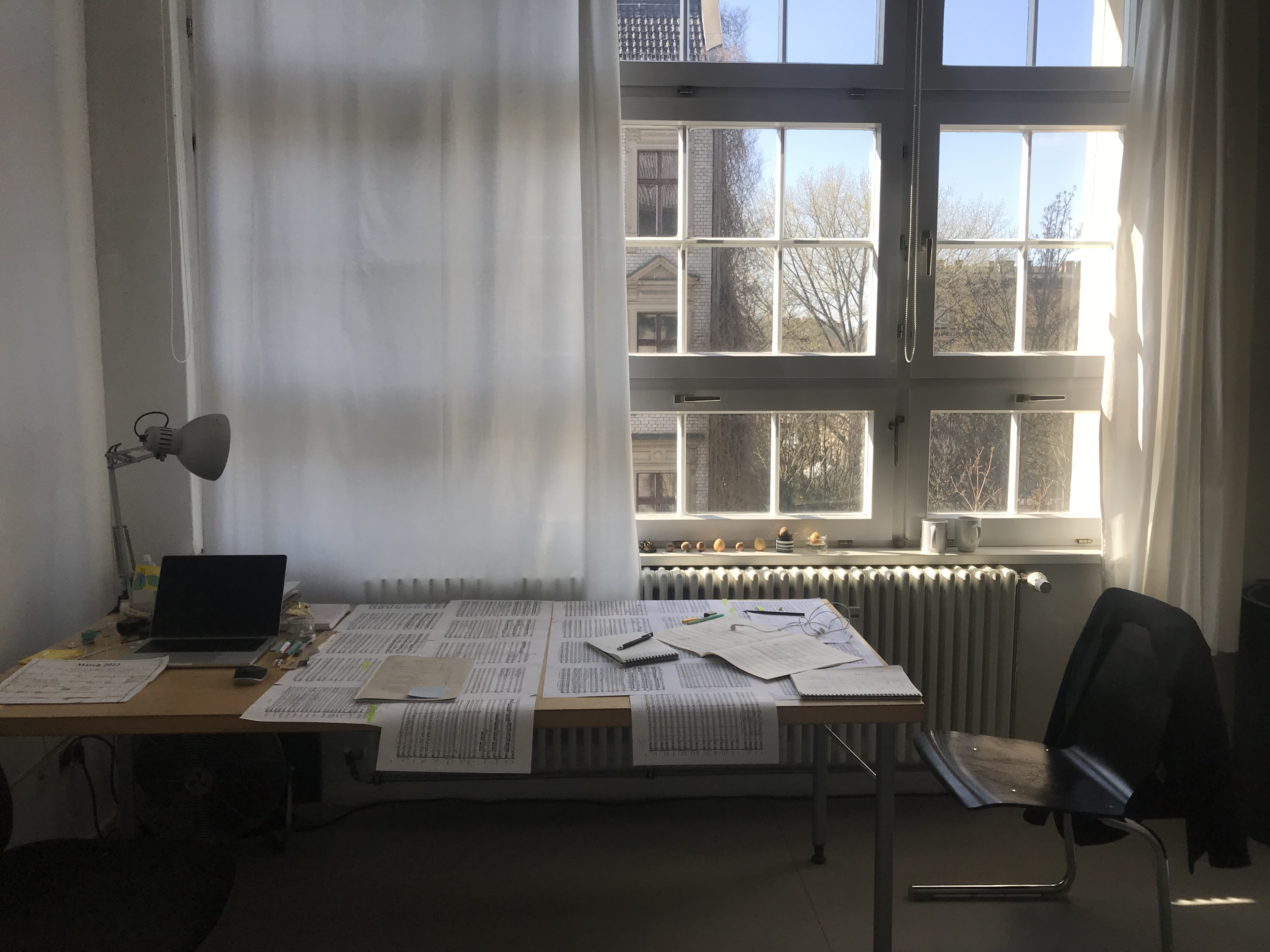
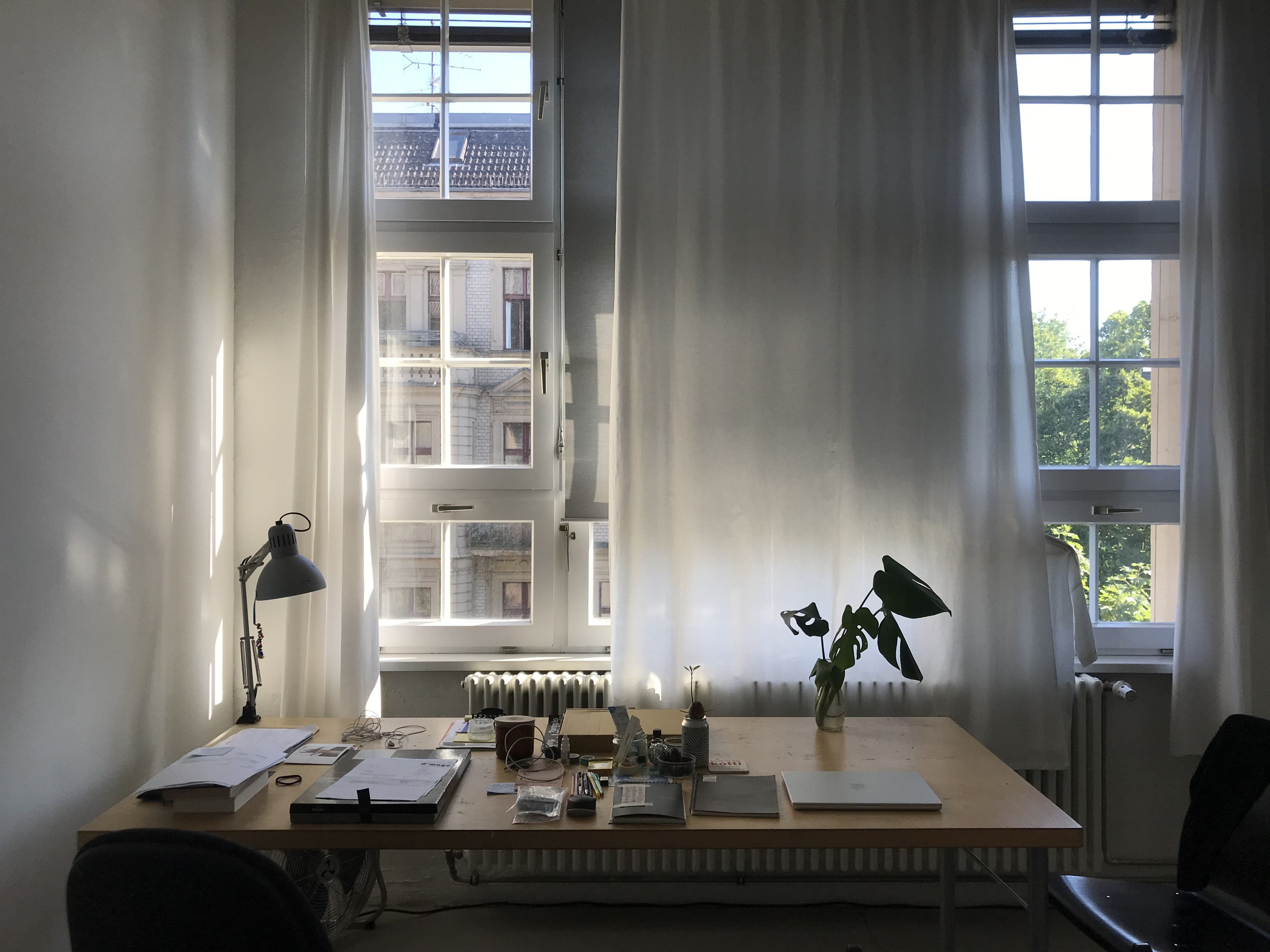
 Corner of my studio
I still remember my first artist residency. It was at the Cite Internationale des Arts in Paris back in 2017. Five years later, in 2022, I headed to another residency program. This time I visited the Künstlerhaus Bethanien in Berlin. Unfortunately, the COVID-19 pandemic had just spread again in Europe right before my trip. For a time I wasn't sure if I'd be able to make the trip. Luckily, I finally made it and arrived in Berlin for my residency.
I was very excited on my first day. It had been a while since I had last left Taiwan. It was also my first time in Berlin and I had high expectations for the new and the unknown. However, my immune system failed me and I caught COVID in less than a week after arrival. At first I thought it would be like a mild cold and I'd get well soon. I was wrong. I had all the worst symptoms. The virus hit me so hard that I could barely get out of my bed. One morning, I opened my mouth and found that it was so sore and swollen that I even considered calling the embassy. It was a whole month before I slowly and finally recovered.
After my recovery, I still had trouble breathing when walking, but at least my life was getting back to normal. Morning was my favourite time of the day. The streets were quiet with only the sounds of birds chirping and the wind rustling through the trees. I'd get out of bed, use the shared bathroom, open the large window facing the courtyard, and look up at the blue sky that seemed so close. I'd start the day with breathing exercises in that tiny space and let my skin feel the cold and crisp winter air. It was incredibly relaxing and a great way to start the day. I can still feel that sense of peace and calm.
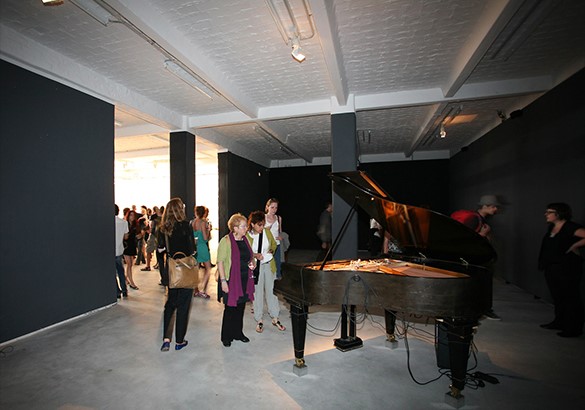
Next, I'd make a simple breakfast and drink my coffee on the window sill. I'd watch the people passing by and neighbours across the street and try to guess where they were headed for the day. I'd start working after breakfast and take a quick break after lunch. After that, I'd map out my route for the afternoon recording on the streets. The war between Ukraine and Russia broke out during my time in Berlin, when I was recording a large variety of sounds from the streets, which eventually led to my multi-channel sound installation Fermata. It was meant to lead people to think about how we listen to each other and empathize with one another in this ever-changing world.
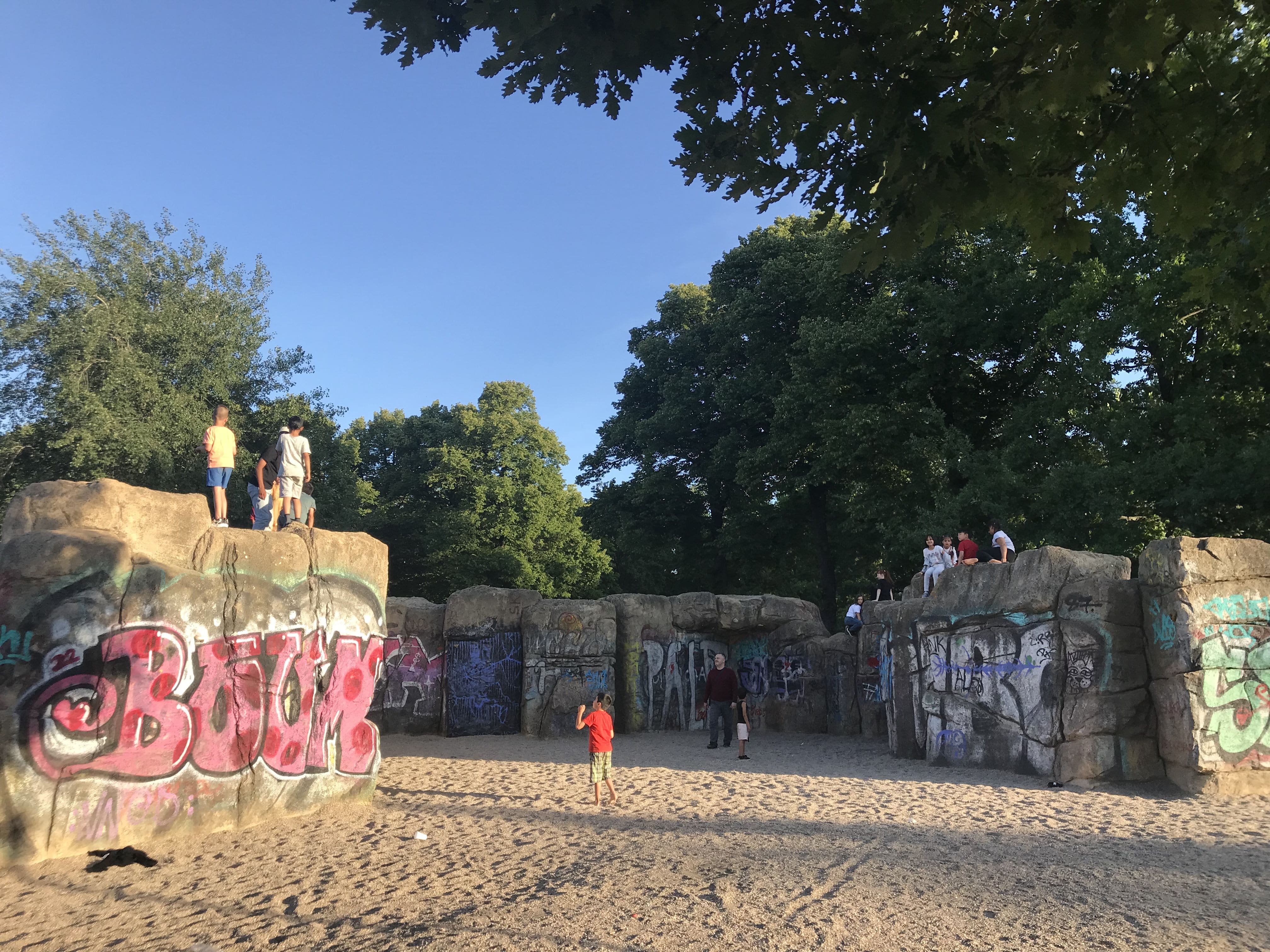
My routes were different every afternoon. Sometimes I walked, sometimes I took the U-Bahn. Sometimes leaving my route unplanned brought unexpected surprises. I remember the graffiti and the parks in Berlin vividly. There were just so many of them. There's a park almost every few blocks. Winter sun is a rare treat in Berlin. When the weather is good, you'd see crowds gather in the parks to enjoy the sun. Graffiti culture seems to have taken root in the city long before the fall of the Berlin Wall. Now they are everywhere. From the political protests on the west side of the wall to the colorful images painted in U-Bahn stations and on apartment buildings, they are like layers of collective memory piled together. When I walk, the graffiti-covered streets seem to send out a raw but captivating vibe.
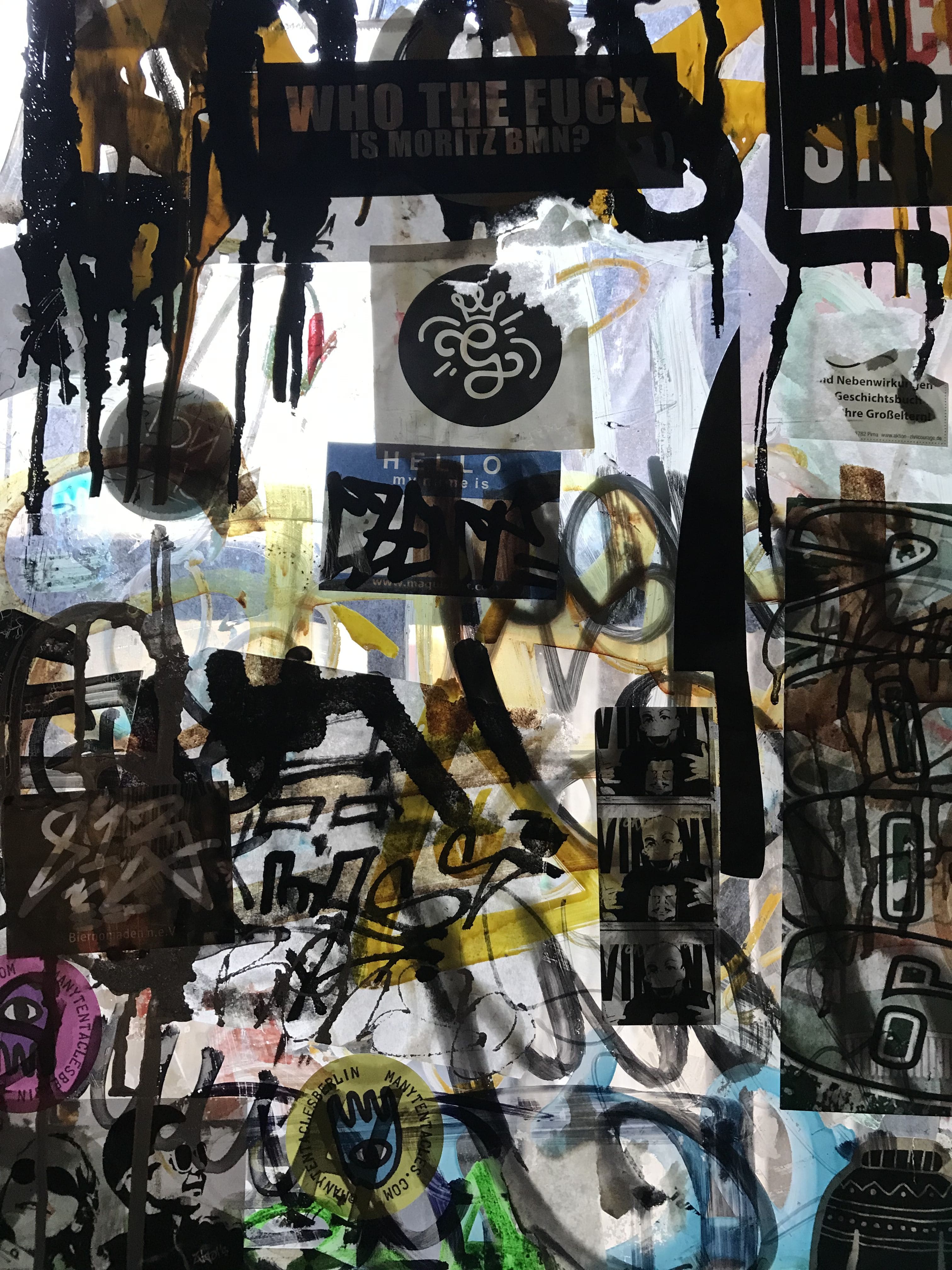 Overlapping layers of Berlin's graffiti culture
But Berlin's winter wind is too strong for me to stay outdoors for too long. I usually return to the studio two or three hours later, sort out my material and files for the day, rest a while, and take a stroll along the river or nearby parks before the sun sets or buy groceries for dinner. There are farmers markets near Bethanien. Most of the vendors are Turkish. Their shouts and calls burst with life and energy. The prices of organic fruits and vegetables here are unbelievably low and cost-saving for an artist living abroad like me.
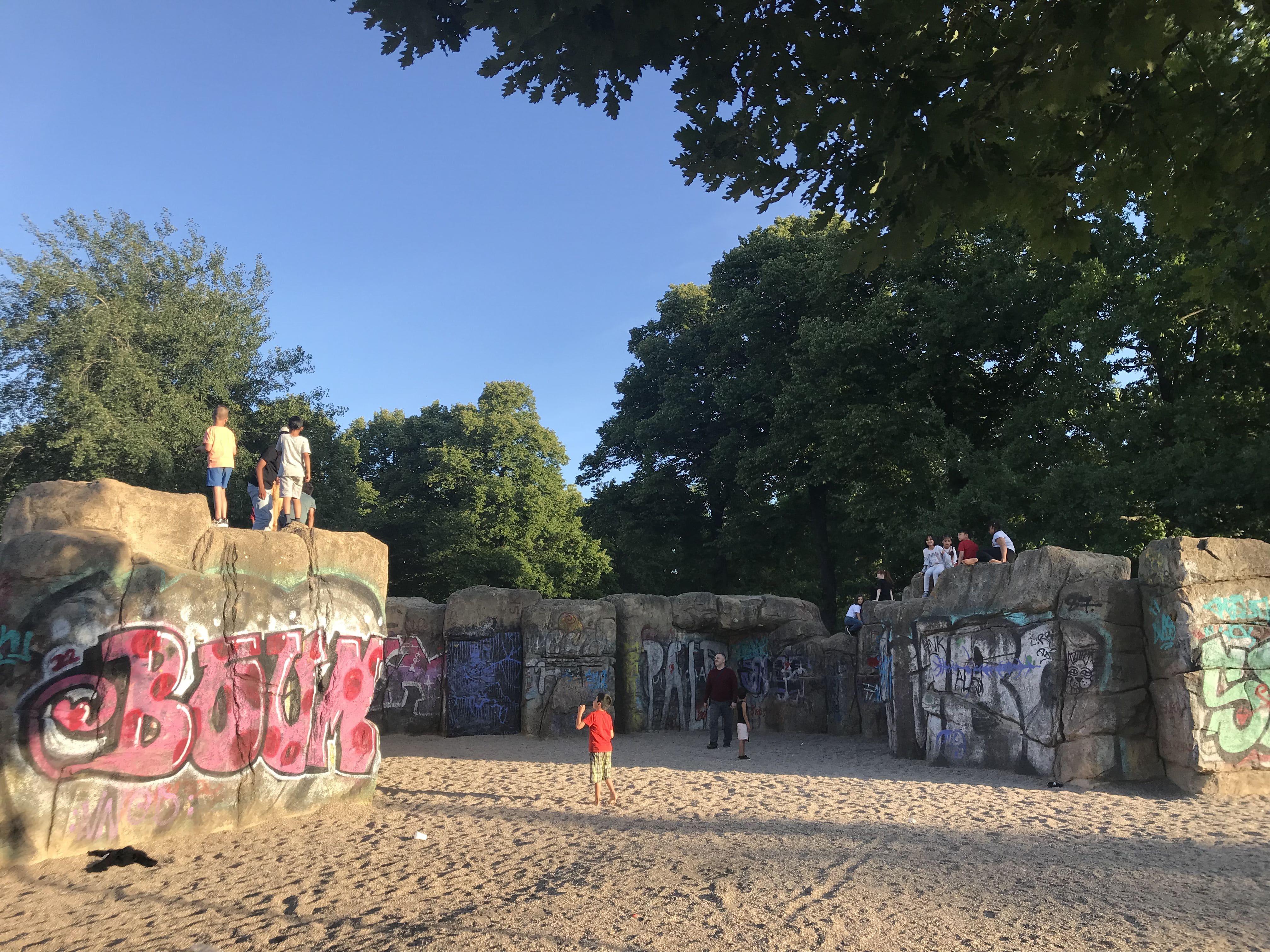 Climbing boulders in one of Berlin's many parks
Compared to the Cite Internationale des Arts in Paris, the residency program at Künstlerhaus Bethanien is smaller in scale. Bethanien has its own exhibition space and organizes solo exhibitions for resident artists. Bethanien also hosts open studios and curator visits. The number of events was just right, not too many and not too frequent.
Bethanien hosts around 20 artists in its studios at the same time, so all the artists in residence know each other. I am more of a quiet person, too many social events were a bit of a pressure for me. My typical Asian mindset is afraid of saying no or leaving a party even when it's my time to go to bed. The result is that I would be tired the next day. Looking back, I should try to keep it easy next time if I go to another residency program. It is a rare opportunity to leave Taipei and focus on my artwork in a different place for a while. What's done is done, and time gone is gone. I still think so even as I write this now.
As I mentioned, I am more of a quiet person. Still, I met many artists from all over the world during my half-year stay at Bethanien. I learned from them and made friends with some of them. For example, I admire artist H for his dedication to art and to exploring Berlin. Artist M and Y always plan ahead and get things done at the right pace, not too fast nor too slow. Artist F is knowledgeable but also humble and kind. He buys newspapers from street vendors and tips the woman who collects recyclable bottles. Artist S and B are passionate and warm. Artist A is calm and collected. Artist C is always ready to listen but also remains true to himself. Artist P often reflected on his identity as a white person. The things I learned from each of their personalities and strengths were among my best takeaways from this program.
As I look back on my stay in Berlin, I was also thinking about my six months here. How long is six months, really? Unfortunately, time cannot be measured, you can only feel it. I remember when I first arrived here, time passed so slowly. Then in my third month in Berlin, it suddenly speeded up and passed away so quickly. It's a good idea to schedule your time for an artist in residence program, but don't set high expectations of what you should achieve during your residency. For me, living my life was just as important as working on my art. Living abroad was also a chance for me to re-examine myself.
After my residency in France and Germany, I began to notice the differences between the two countries. The French are more relaxed, intuitive, and more driven by their feelings. I remember once I was spacing out artworks with a tape measure for a joint exhibition. The French guy working next to me simply placed the works against the wall. It only took him a few seconds. He told me that sometimes it's quicker to rely on instinct. This time, after living in Germany for a few months, I began to see the similarities between the Germans and the Japanese and note the differences between the French and the Germans. The Germans are very efficient, respond to emails quickly, are willing to arrive at work early but less willing to stay late. These distinctions got me thinking if I can find a balance between the two cultures.
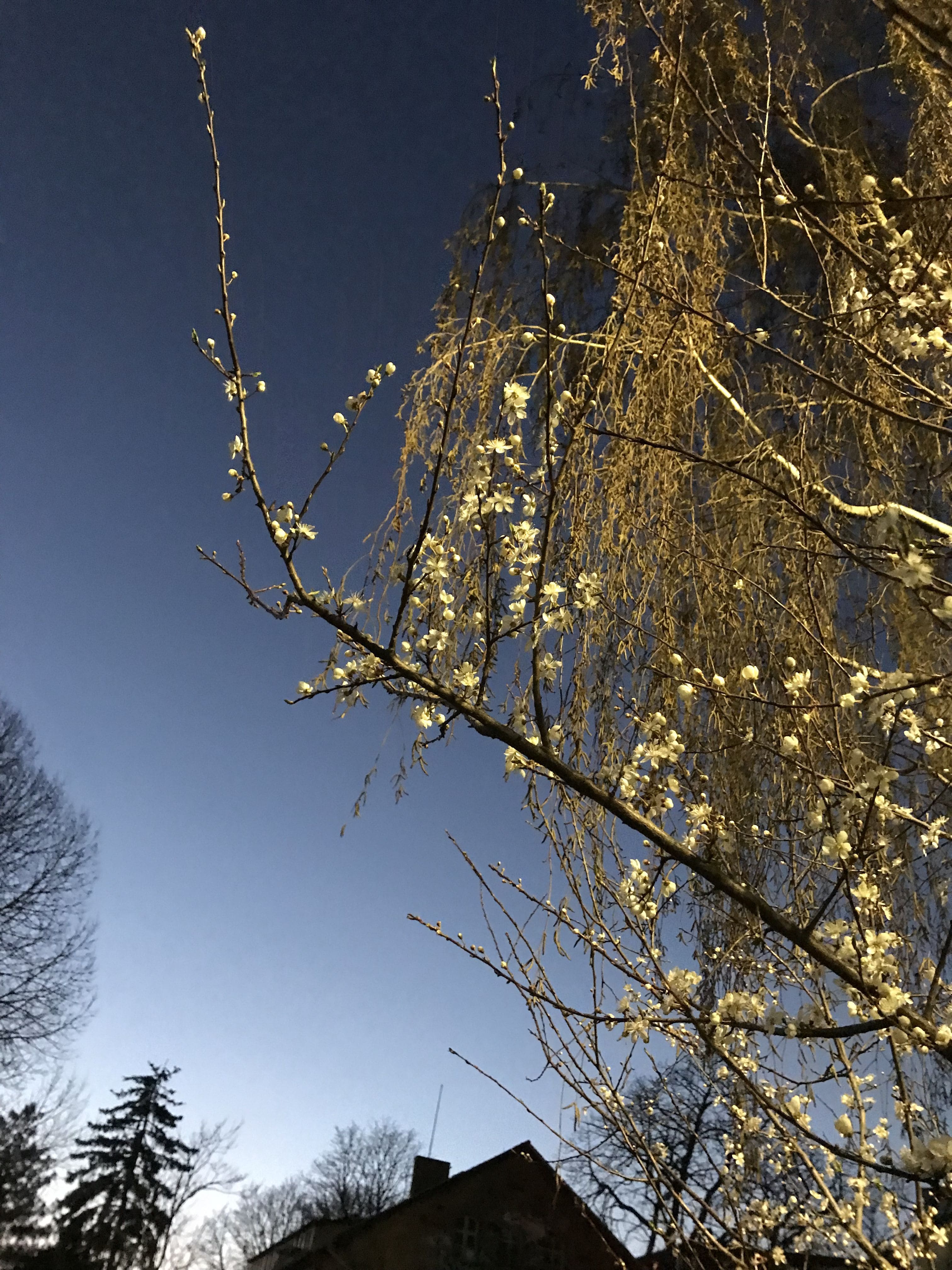 Fresh buds outside my studio window
During my time in Berlin, what struck me the most was the change of seasons. When spring arrived, the row of trees outside the studio sprouted new buds overnight, birds came back to nest, and the cherry blossoms quietly bloomed. The rhythm of nature felt like a reminder that life is a continuous cycle of decay and rebirth. After this residency program, I seem to have found my way with the world and a balance between holding on and letting go.
Author: Wang Hsiang-Lin
Edited: Brix