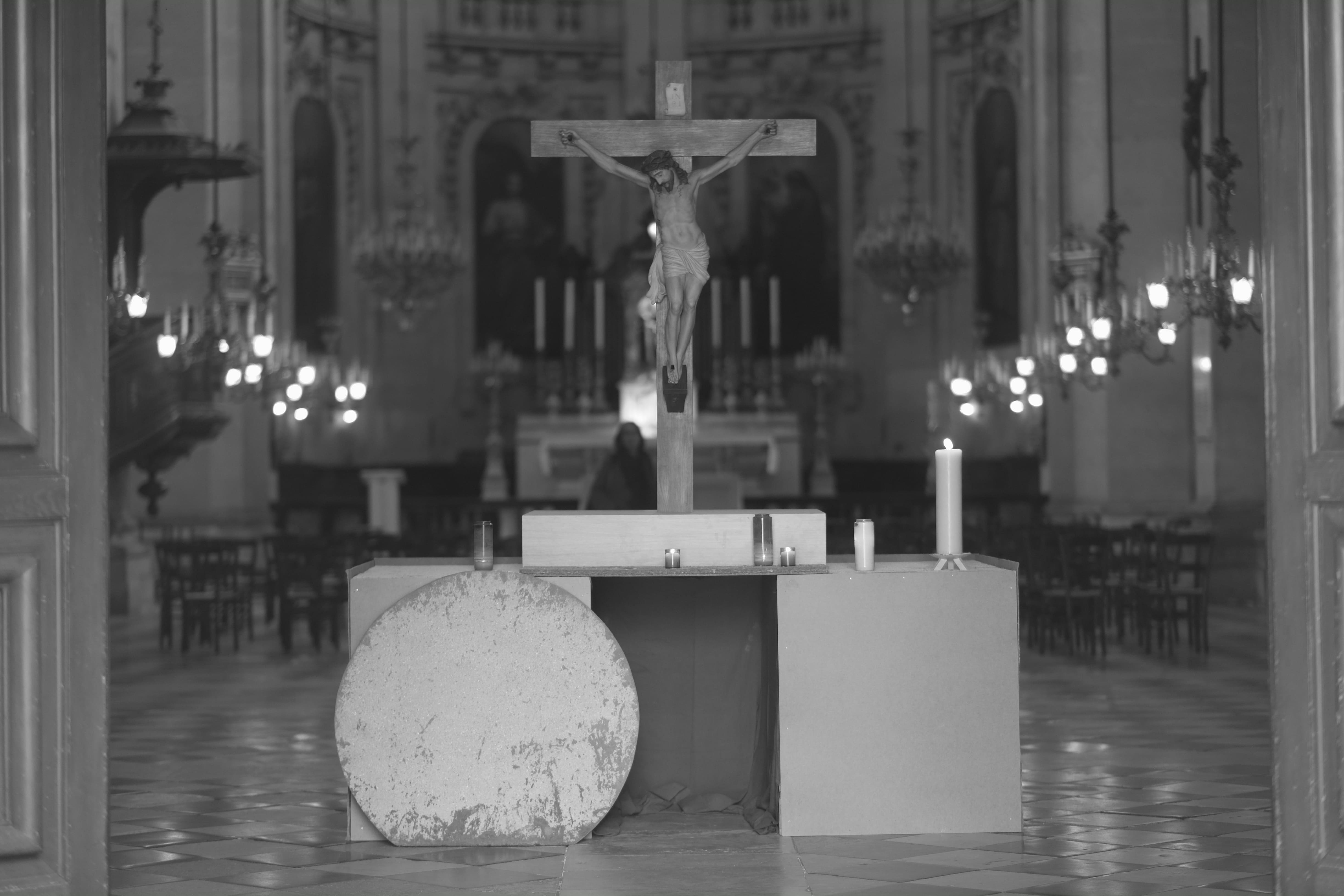
 An altar set up at the entrance of the Saint-Louis Church in Paris during the pandemic.
Looking back from 2025, my time at the Cité Internationale des Arts in Paris feels like a searing chapter - dramatic, disruptive, and indelibly etched into the arc of my life. Undoubtedly, 2020 marked the most emblematic year in modern history. Few could forget the devastating fire at Notre-Dame in April 2019. For many, the cathedral had stood as a symbol of eternity, and yet it was suddenly devoured by flames. I had a feeling that the stabilizing force that had once anchored the world was subsiding. Then, a wave of natural disasters and a growing sense of doom followed. The political tensions between China and Hong Kong escalated into sustained pro-democracy protests amid police brutality. Around the same time, vague, clickbait-like reports appeared online about a mysterious outbreak in China, allegedly originating from bats, with little reliable detail. I paid little mind at the time. My focus was entirely on the upcoming 6-month residency in Paris. I had prepared a meticulously curated list of museums and performances to see, and I was filled with anticipation.
Heading for Paris
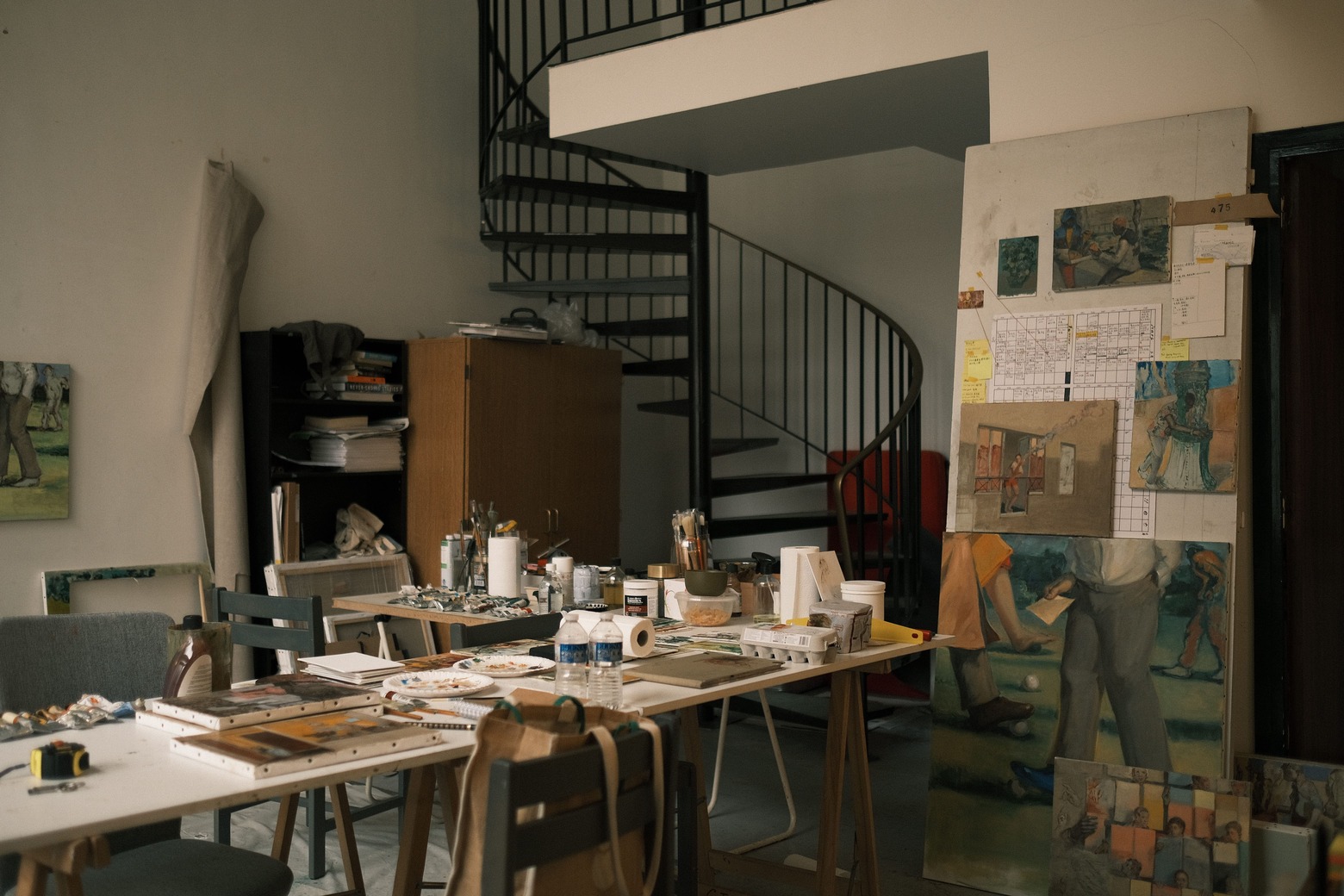
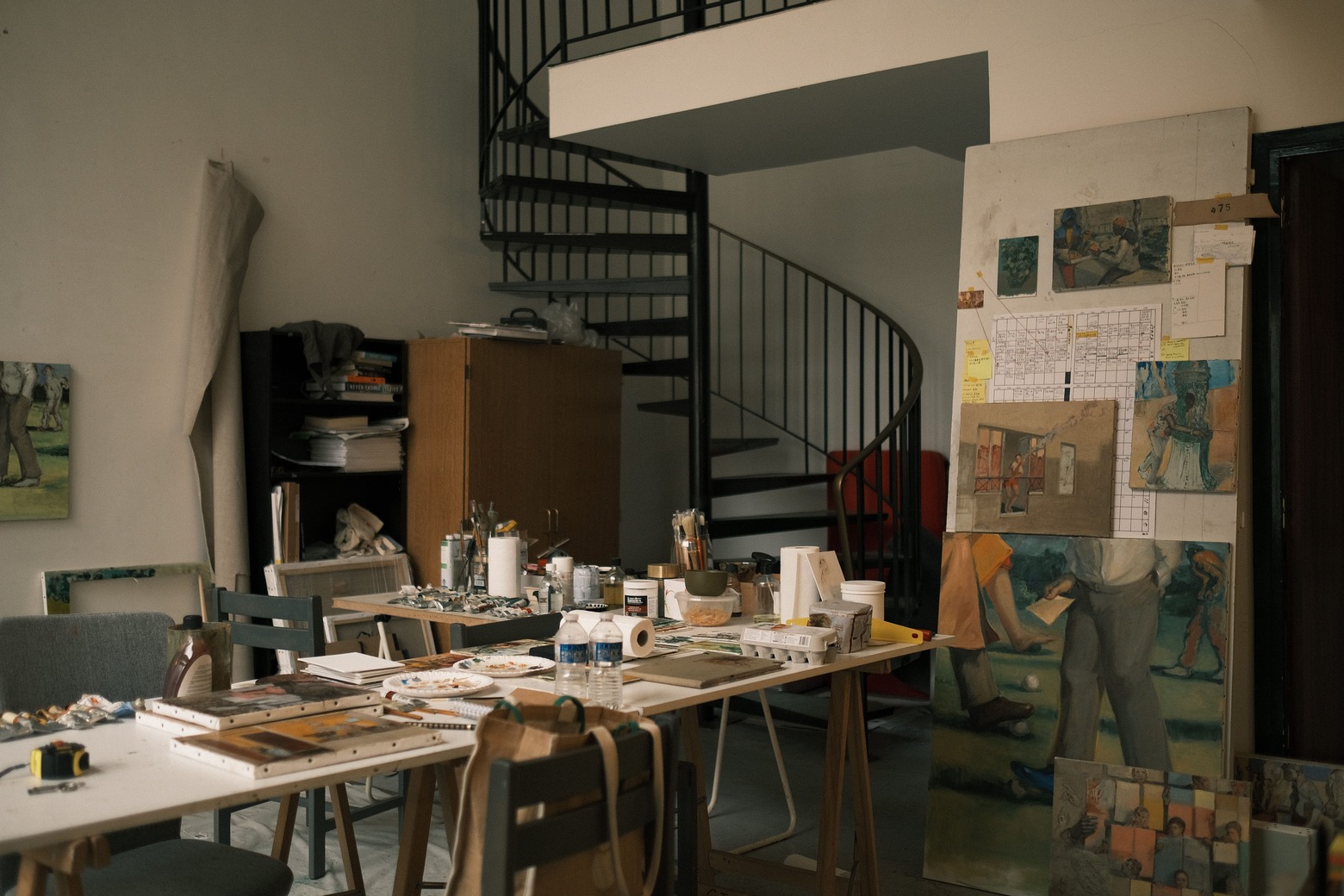 A view of the artist’s studio during the lockdown at the Cité Internationale des Arts.
After a 14-hour transatlantic flight, I arrived at the Cité Internationale des Arts in Paris, luggage in tow. I was assigned a double-height studio with a winding staircase, its entrance opening onto a courtyard, all beneath a clear, brilliant temperate sky. The air was damp and cold upon my arrival, the distant chime of a church bell strange and familiar at once. I began to envision the rhythm of my artistic practice for the coming months, a conscious effort to soothe the residual anxieties left by the pandemic.
During the first two weeks of the residency, I maximized my time by visiting museums, attending a welcome event at Centre Culturel de Taïwan à Paris, and sourcing materials from local canvas suppliers. The Cité artist pass granted unlimited entry to the Louvre, Musée d'Orsay, and Centre Pompidou, in addition to discounts at art supply stores. Some fellow resident artists and I also took the opportunity to explore experimental music concerts. Paris moves at a pace that is both free and relaxed. Sometimes, an entire afternoon can simply be passed in contemplation, just sitting by the Seine.
Yet the virus spread almost overnight, leading the French government to swiftly announce a nationwide lockdown and border restrictions. I clearly recall the emergency meeting convened by Centre Culturel de Taïwan à Paris at dawn, where all the artists in residence were required to make a choice: to stay, or to leave. To stay meant accepting an unpredictable experiment, and preparing oneself for the challenges to both health and psychological well-being. It was at that moment I truly realized this was a global trial that would not end quickly. I made up my mind almost without hesitation. I felt an inner desire to see how I would approach my artistic practice amid such heightened anxiety and uncertainty. Thus, I chose to stay.
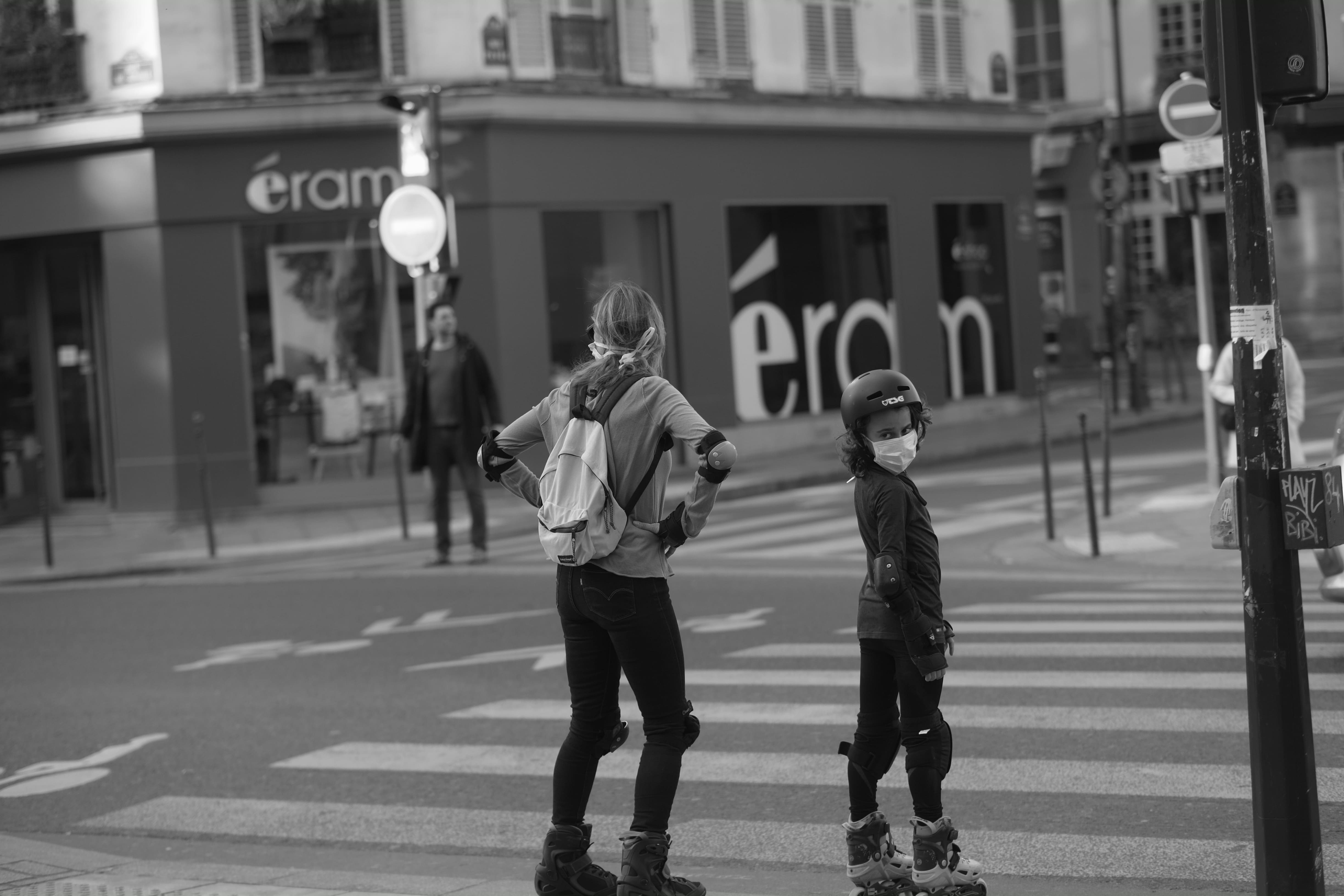 Paris amidst the pandemic.
Leonardo da Vinci Quincentenary Exhibition on the Eve of Lockdown
Just before the lockdown, the Louvre was hosting its landmark 500th-anniversary exhibition of Leonardo da Vinci, which included an all-night viewing event. As a Leonardo da Vinci admirer, this was an opportunity I couldn't afford to miss. After continuously refreshing the webpage, I finally secured a ticket for the 3:00 AM entry slot. That night, the exhibition hall was dimly lit, with select beams of light spilling onto the floor from the glass pyramid. I joined a handful of other attendees as we slowly moved through the galleries. The Louvre thoughtfully provided coffee and croissants. The exhibition unfolded with a profound and layered rhythm, moving from Leonardo da Vinci’s sketches on light, shadow, and drapery to his anatomical quick studies, notebooks, and engineering drafts. It also featured various preparatory sketches and small models for The Last Supper, consolidating the corresponding original works for the display. The exhibition brought together the most comprehensive collection of Leonardo da Vinci research ever assembled, including his famous Vitruvian Man and his designs for flying machines.
At noon on March 17, 2020, the French government announced a nationwide lockdown. Paris instantly turned into a ghost city. Amidst the continuous sound of ambulance sirens, the initial 2-week restriction was ultimately extended to nearly 2 months, with a gradual reopening not starting until late May. The lockdown regulations strictly prohibited all non-essential movement, allowing citizens to leave only for necessities like grocery shopping, medical appointments, or essential work. Daily outdoor activity was limited to 1 hour and a 5-kilometer radius. A paper permit had to be completed for every single outing. All schools, restaurants, cafés, and non-essential businesses were closed, public transport was curtailed, and border controls were tightened.
Since I had planned a 6-month residency centered on extensive visits and cultural exchange, the lockdown was a heavy blow. The nature of a residency was opposite to that of the quarantine. Although over 300 artists chose to stay, most practiced self-isolation, severely limiting exchange. The atmosphere quickly became suppressed and closed off. Living became a significant challenge, overwhelmed by language barriers, cultural isolation, and the disillusionment of artistic visions.
On the other hand, I was deeply concerned about the situation in Hong Kong. Unfortunately, the pandemic served as a catalyst for the Chinese government to suppress the region, with lockdown and public health measures serving as pretexts to restrict and monitor the populace. For the first month or so, I struggled with immense pressure and tension. As the weather warmed, my refrigerator’s insufficient cooling made food storage difficult. Every meal required preparation from scratch, and I had to carefully calculate portions to avoid waste while ensuring sustenance. It was a mess at first; a new challenge arose daily, upon waking. Furthermore, as is common with old European buildings, there was no air conditioning. When the heatwave struck, it was useless even if I kept the room window open. I felt suffocated by the heat.
Fortunately, I am not one to suffer from the anxieties of solitude; in fact, being alone often brings me a sense of ease. Confined to the studio day after day, my focus shifted to watching the light migrate across the walls. Outside my window unfolded the daily life of a family of four: an elderly mother reading in the afternoon, 2 young boys playing in the courtyard, and their father running and laughing with them.
Artistic Interventions amidst Lockdown
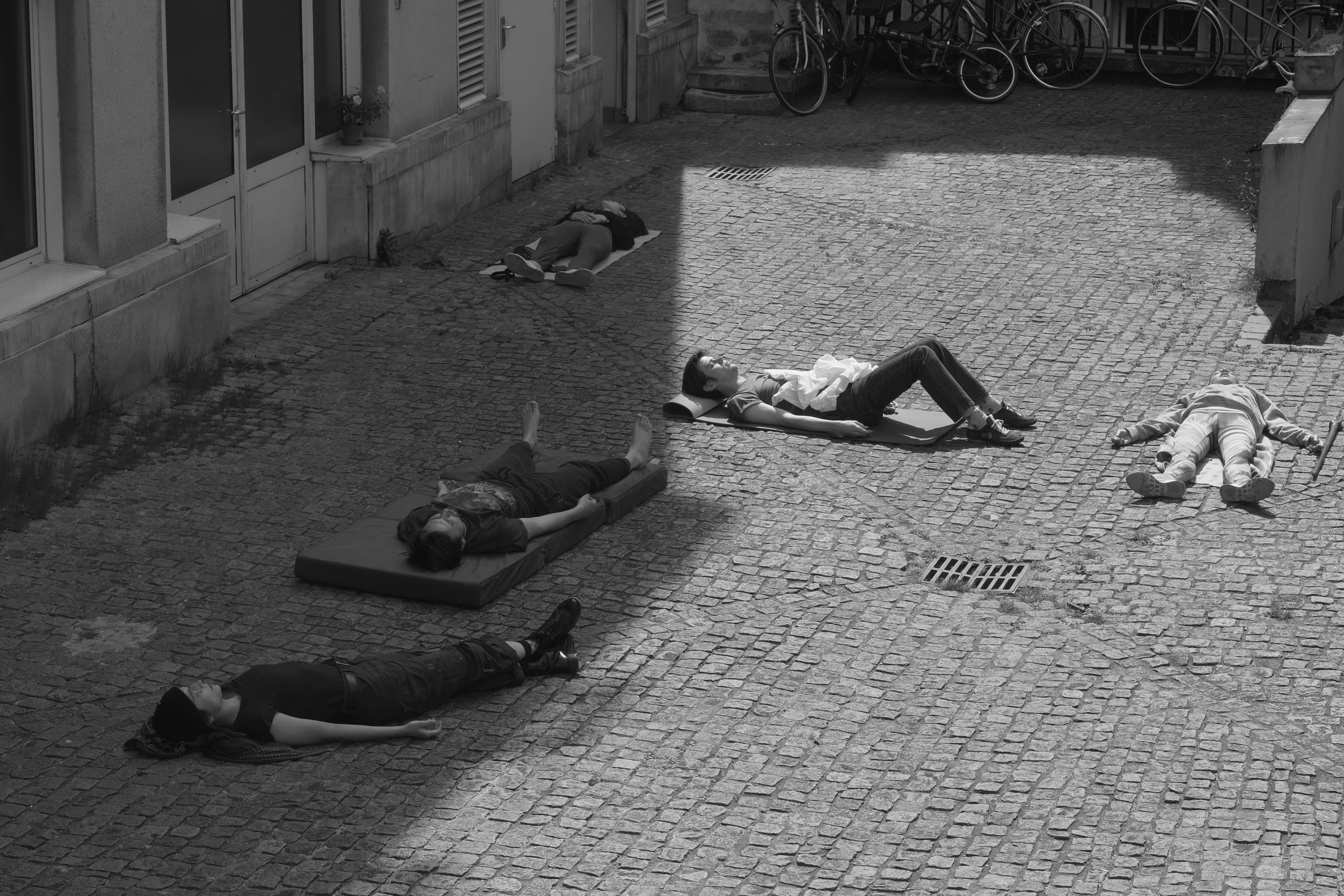 A yoga workshop held at the Cité Internationale des Arts.
Performance artists would occasionally lead stretching activities in the courtyard. A 1-meter safe distance was maintained and handshakes were replaced with light fist bumps, everyone participated in the exchange as much as possible. These impromptu events offered a momentary reprieve from loneliness and anxiety, with both physical and psychological relief. Sometimes, residents would even project films or artworks onto the walls, which we would watch from our balconies. Although no one was allowed to go out, these impromptu screenings transformed our confinement into a unique spectacle.
Every evening at eight, the city erupted in applause and cheers for healthcare workers. This soon evolved into building-wide performances, with some playing music and others singing aloud. The heartfelt expression of the French people was moving. On the streets, one could also see medical staff delivering supplies and testing to the homeless, showcasing the city’s humanitarian spirit in its most challenging time.
The nights where the sun remains high in the sky are a part of European summer I deeply appreciate. The extended daylight seemed to give me ample time for both work and contemplation, naturally slowing down the pace of life. When it was finally time for our permitted outdoor hour, I walked the streets to find iconic landmarks deserted, as if in an apocalypse. Only a few distant figures could be seen jogging; I could almost hear their breathing. Especially as dusk approached, the silhouettes were cast long. The pink light intersected with the old and new architecture, illuminating the cobblestone streets that shimmered with a pale yellow glow, framing an arched stone doorway. This city, the birthplace of Surrealism, now found its reality perfectly embodying the concept.
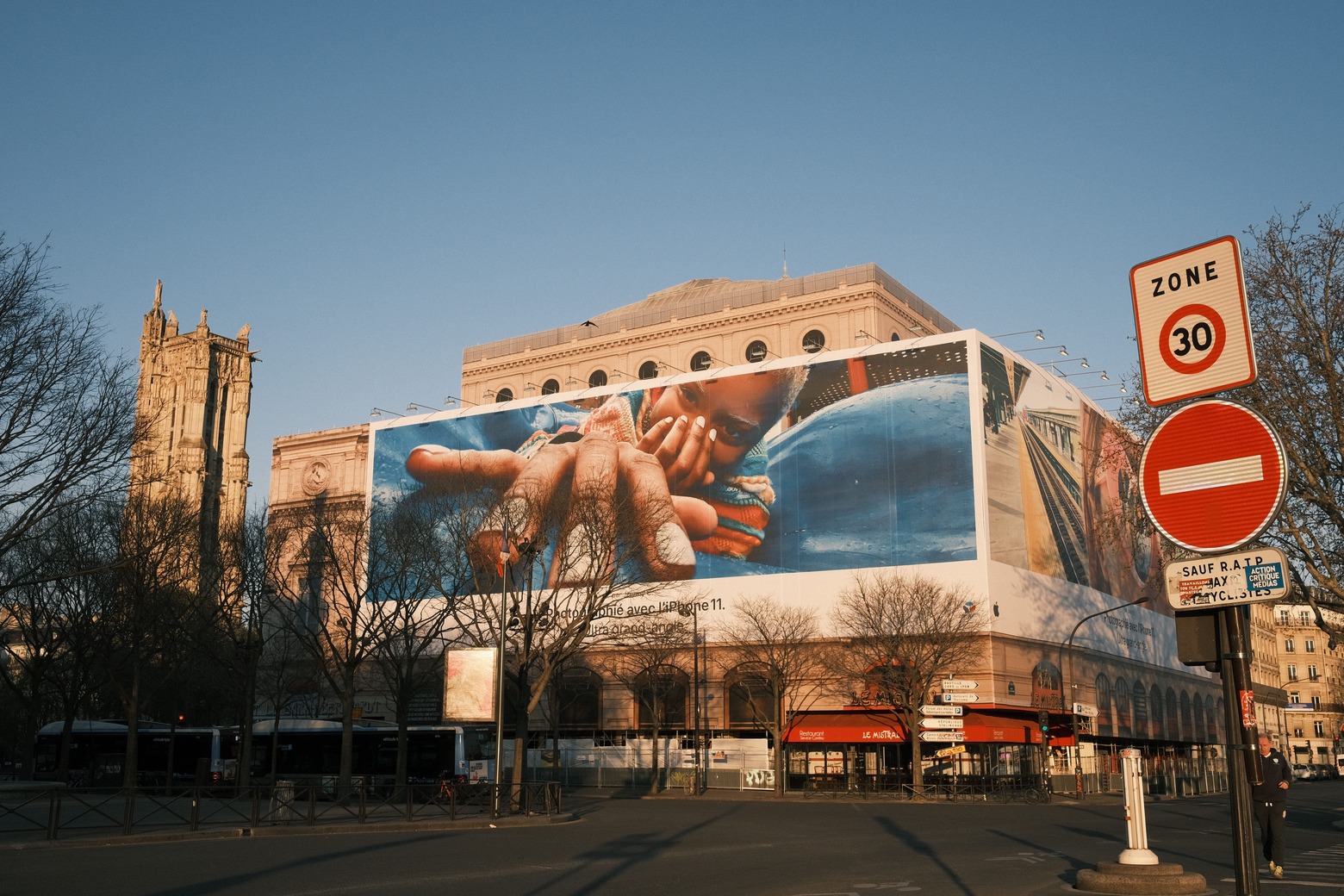 The Théâtre de la Ville in Paris in one late afternoon, without visitors.
During that period, I also dedicated significant time online, monitoring pandemic information and watching meditation videos. On one occasion, I was particularly struck by a photograph of a makeshift brick wall from Hong Kong’s Anti-Extradition Law Amendment Bill Movement. It was a structure erected to block police vehicles: fragile and temporary, yet a powerful symbol of conviction. I began to collect similar images online with the help of friends, sketching them on small canvases as if drawing from life. This gradually developed into a crucial artistic theme during my residency.
Although the Cité gates separated us from the outside world, visits and exchanges between residents gradually flourished. People started setting up tables in the courtyard to share wine and recount their experiences since the lockdown. Among us, a friend from Lebanon and her architect flatmate got married. One artist faced family debates as s/he couldn’t return home to see his/her dying father. A sitar musician organized an outdoor concert, bringing a respite to the tense days. In the nights under curfew, those with energy continued visiting each other, or simply gathered in smaller groups, conversing in hushed tones. Looking out at the dim yellow light, I heard the distant clatter of hooves - the police’s nocturnal patrol. As the sharp, rhythmic sound echoed through ancient corridors and my vision slightly blurred by wine, I felt transported back to an older Paris.
After nearly 3 months of lockdown, Paris slowly resumed. While large department stores remained closed, small street bistros and cafés started offering outdoor seating or takeaway service. I was slightly disappointed that museums had not yet reopened, but the policy was certainly understandable. The sheer relief of escaping my cramped space and venturing out to reconnect with nature was exhilarating enough. I quickly arranged a gathering with a few friends for a picnic and hike in a forest park north of Paris. We soaked up the sun, shared wine and conversation, and released the tension and suppression accumulated over the past months.
Four months into the residency, I picked up a new pace. It was no longer the familiar structure of my past artistic routine, but a state between observation, waiting, and slow action. Everything was deferred, and nothing proceeded according to its original tempo. Yet, this very disruption allowed me to reconsider the starting point of my work and the necessity of creation itself.
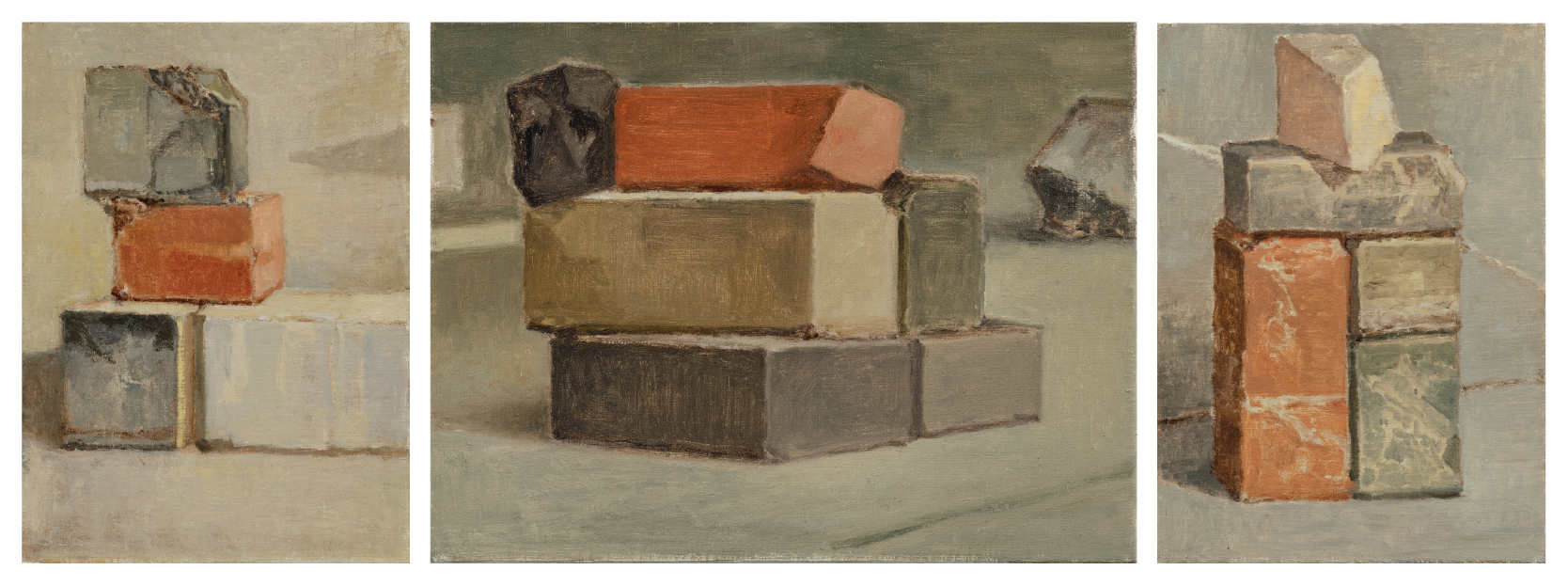 The Barricade series created during the residency.
Epilogue
I began to re-examine the exhibitions and projects that had been interrupted or indefinitely postponed due to the pandemic, striving to distill new creative motivation from the lockdown experience. In this disruption of routine, I felt a powerful shift in my perception of time: with an unplannable future and an unpredictable tomorrow, I became increasingly focused on the actions and sensations of the present. This psychological state gradually infused itself into my visuals, resulting in more direct compositions, more condensed scenes, and a heightened contemplation of time and space.
The concept for many of the works originated from the fragmented, yet moving, daily moments spent in the studio. Instead of clinging to a grand structure, I began to collect clues from these daily fragments that could lead to my inner self. Although the residency experience, altered by the pandemic, disrupted my original plans and expectations, it compelled me to return to a method of creation closer to life and my own truth. When I finally began preparing for my 2021 solo exhibition, I realized that those months of waiting and adversity had quietly fermented in my work.
Author: Chen Ching-Yuan
Edited: Brix