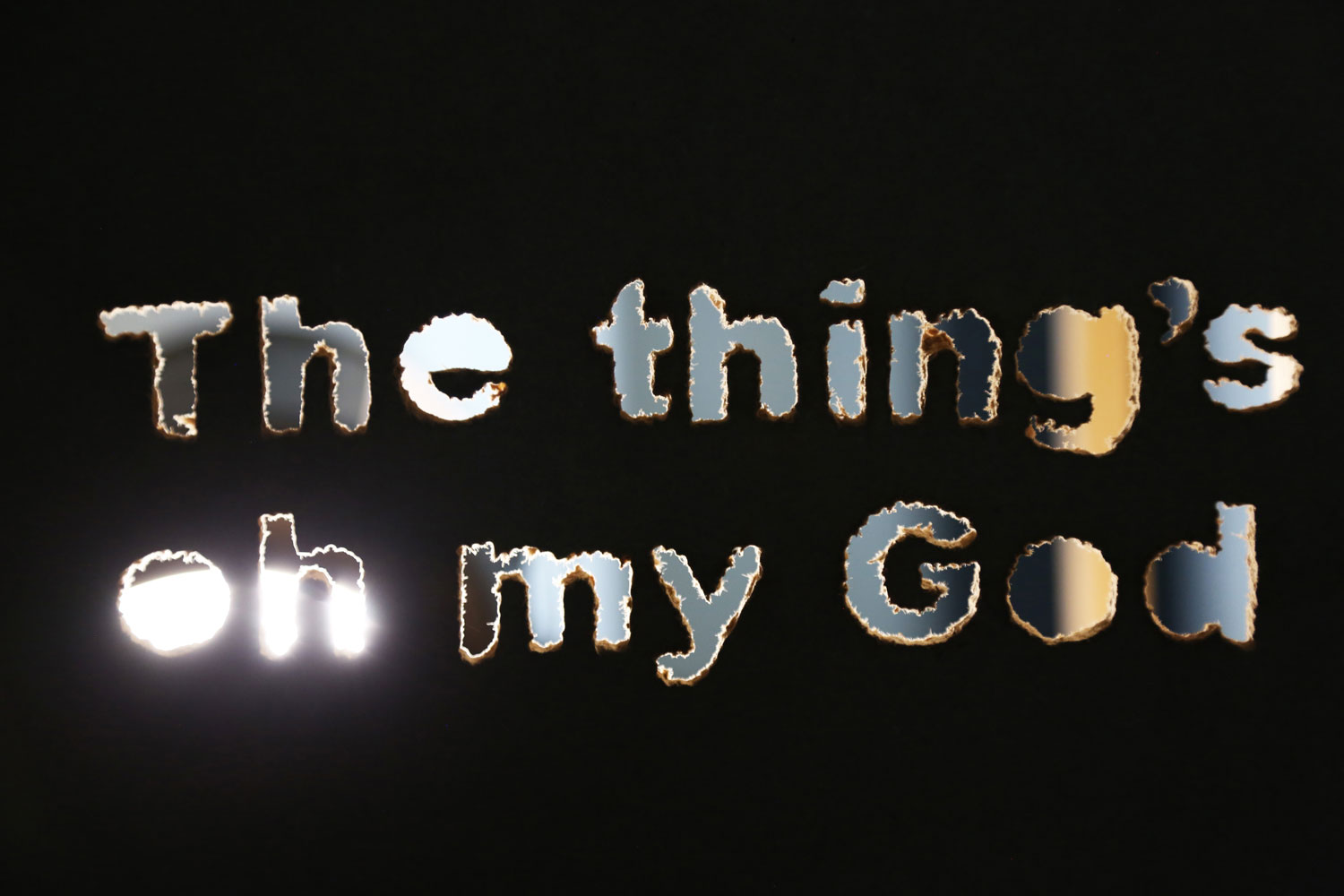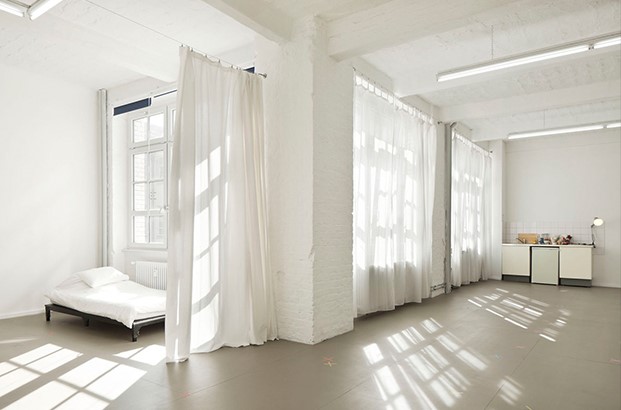
It was snowing on the day I arrived in Berlin. A friend met me at the airport to help carry my luggage and tools. I was caught somewhere between anxiety and anticipation. Every time I travel abroad for an exhibition or residency, I feel this same mix of emotions. I’m not someone who thrives in social settings or noisy environments, yet I understand the potential that such exchanges can offer. Spending an extended period in an unfamiliar place, surrounded by new people, is both a challenge and an opportunity to recalibrate myself.
This time, I was participating in a residency at Künstlerhaus Bethanien in Berlin as part of an official exchange program. I knew I needed to approach the experience with greater openness, whether in conversations with fellow artists, in interactions with visitors during open studio events, or in preparing for the final exhibition at the museum. Each part of the process required thoughtful preparation and genuine effort, and also a willingness to set aside my usual reservations and embrace each encounter with an open mind.
For me, residency is both a shift in the pace of daily life and a practice of self-reflection and renewal. On my first day at the artists’ village, the program manager, Valeria, gave me a tour of the complex - an experience that felt like navigating a maze. Künstlerhaus Bethanien is located in Kreuzberg, Berlin. Originally a 19th-century hospital complex, it has since been refurbished into a diverse and experimental arts base. As I walked through the century-old brick buildings, I often imagined what the wards might have looked like, the sounds that once filled the corridors, and the flow of people that moved through them. These traces of the past remain quietly present, continuing to permeate my thoughts.
 Open studio at Künstlerhaus Bethanien
A City Enveloped in Shadows
Life at the artists’ village had a grounded, everyday rhythm - simple and steady. Each morning, in this community surrounded by trees and old buildings, I was accompanied purely by the sound of the wind and the chirping of sparrows outside my window. I would start the day with a cup of black coffee, sitting by the window for a quiet breakfast before heading to the workshop at 8:00 a.m. The workshop included both woodworking and metalworking areas, and in the mornings, I usually had the space solely to myself. This uninterrupted time of focused work was invaluable for a creator.
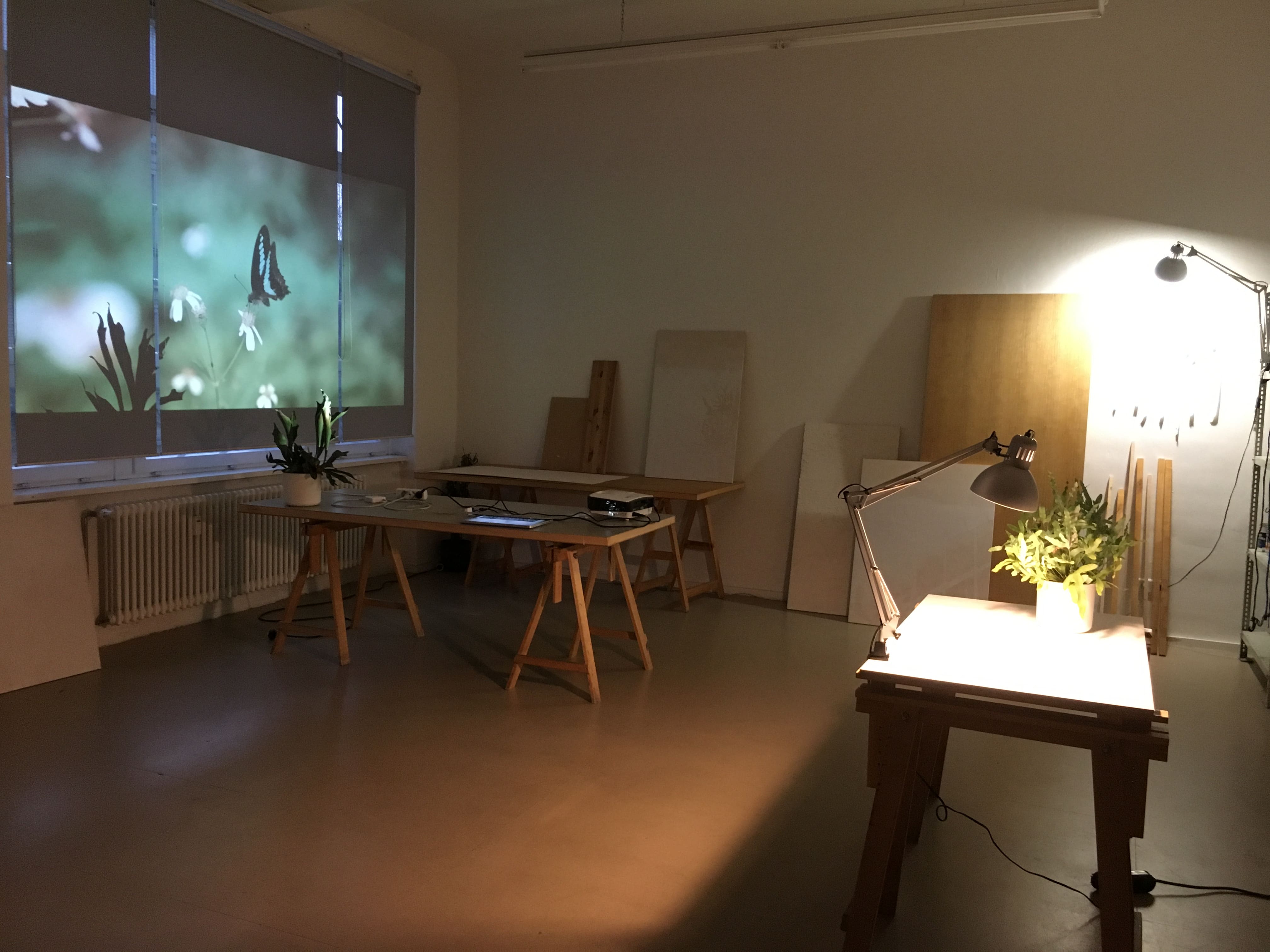
Around noon, other artists would gradually arrive. Among them, Haden, an artist from Australia, was my closest working partner. He was creating a large installation combining metal structures, plants, and VR elements. We often worked side by side at opposite tables, ready to assist each other when needed. The workshop was filled with the music he brought in, mingling with the sounds of tools and shifting light. This created a curious, immersive atmosphere for concentration.
In the evenings, I would leave the workshop for long walks through the city, often 2 hours at a time. Spring in Berlin is dry and crisp; in the late afternoon, sunlight filters through the trees along the riverbanks, the sky tinged with a soft orange-red glow. These daily shifts in light and shadow gave me a new understanding of the weight of the everyday. The seemingly ordinary moments repeated day after day hold hidden emotion and memory.
My work has long centered on “the unseen parts of daily life” and “collective memory.” Berlin, a city with profound historical depth, is itself a living record. Everywhere you walk, traces of postwar rupture and repair are visible. I often explored different routes in search of historical sites: fragments of the Berlin Wall, the Memorial to the Murdered Jews of Europe, historical archives, and overlooked symbols and totems left on old walls. These seemingly static objects hold a tremendous emotional charge and energy, prompting me to continually seek new forms of bodily expression and visual narrative amid fragments and traces.
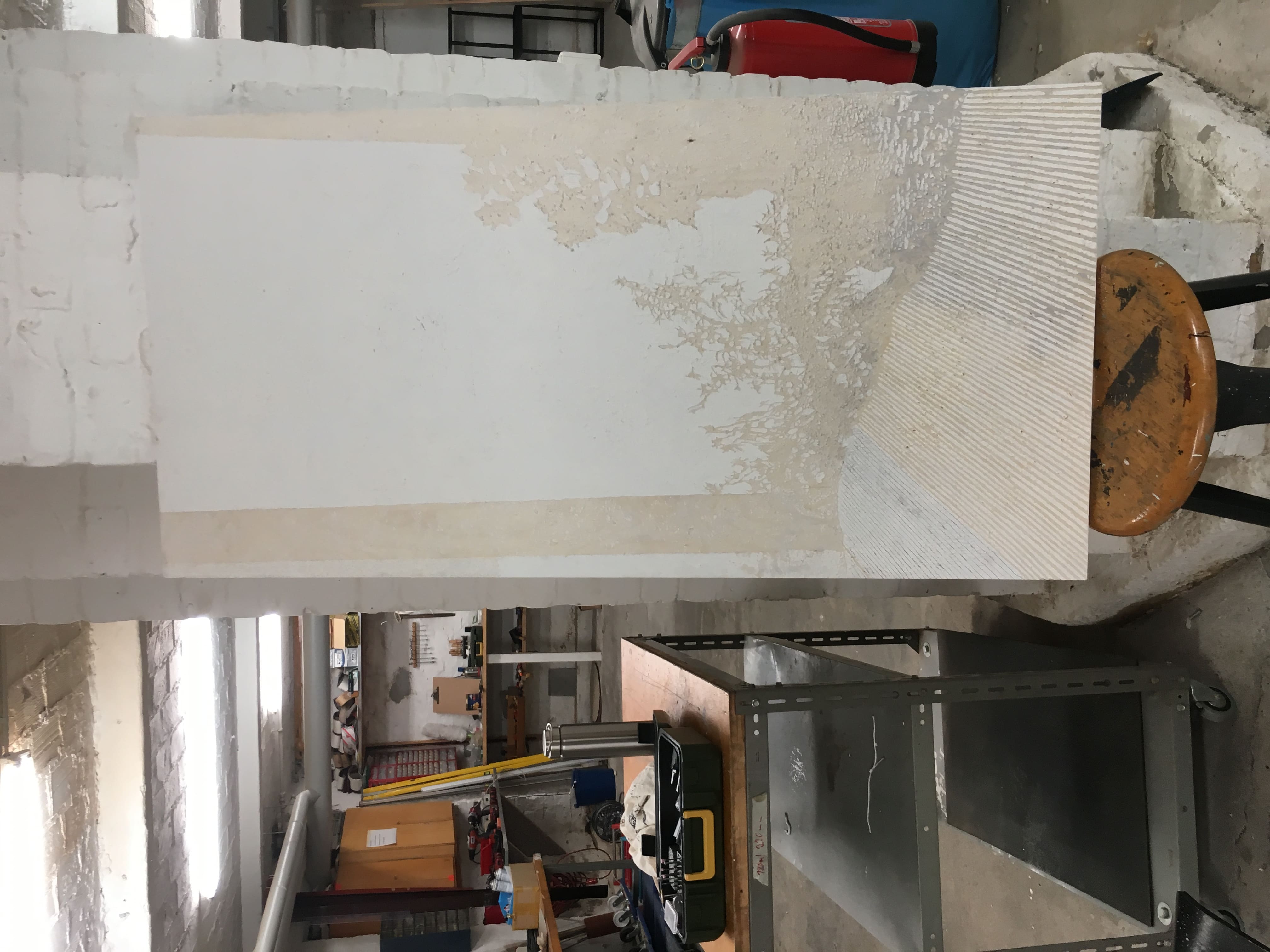 Workshop space and work-in-progress at Künstlerhaus Bethanien
Boundaries Carved by Time
During my residency in Berlin, I often visited construction sites in search of reclaimed wood. These materials, mostly salvaged from demolition or renovation projects, bore cracks and marks left by time. I would bring them back to the workshop, where I sanded and reassembled them, then carved onto their surfaces the subtle shadows of trees moving across corners of the city. These fleeting patterns of light and shadow were drawn from my walks, seen along the edges of buildings, behind statues, or in overlooked pockets of shade. Such quiet, elusive landscapes consistently sparked my creative impulses.
They also resembled scenes from science fiction films, especially those that depict the blurred boundaries between nature and technology. These impressions intertwined with the weathered textures of postwar ruins, becoming key elements in my work during this period. Ultimately, they were transformed into a series of spatial installations in continuation of my other project Daylighting from recent years. They were also reinterpreted through site-specific approaches.
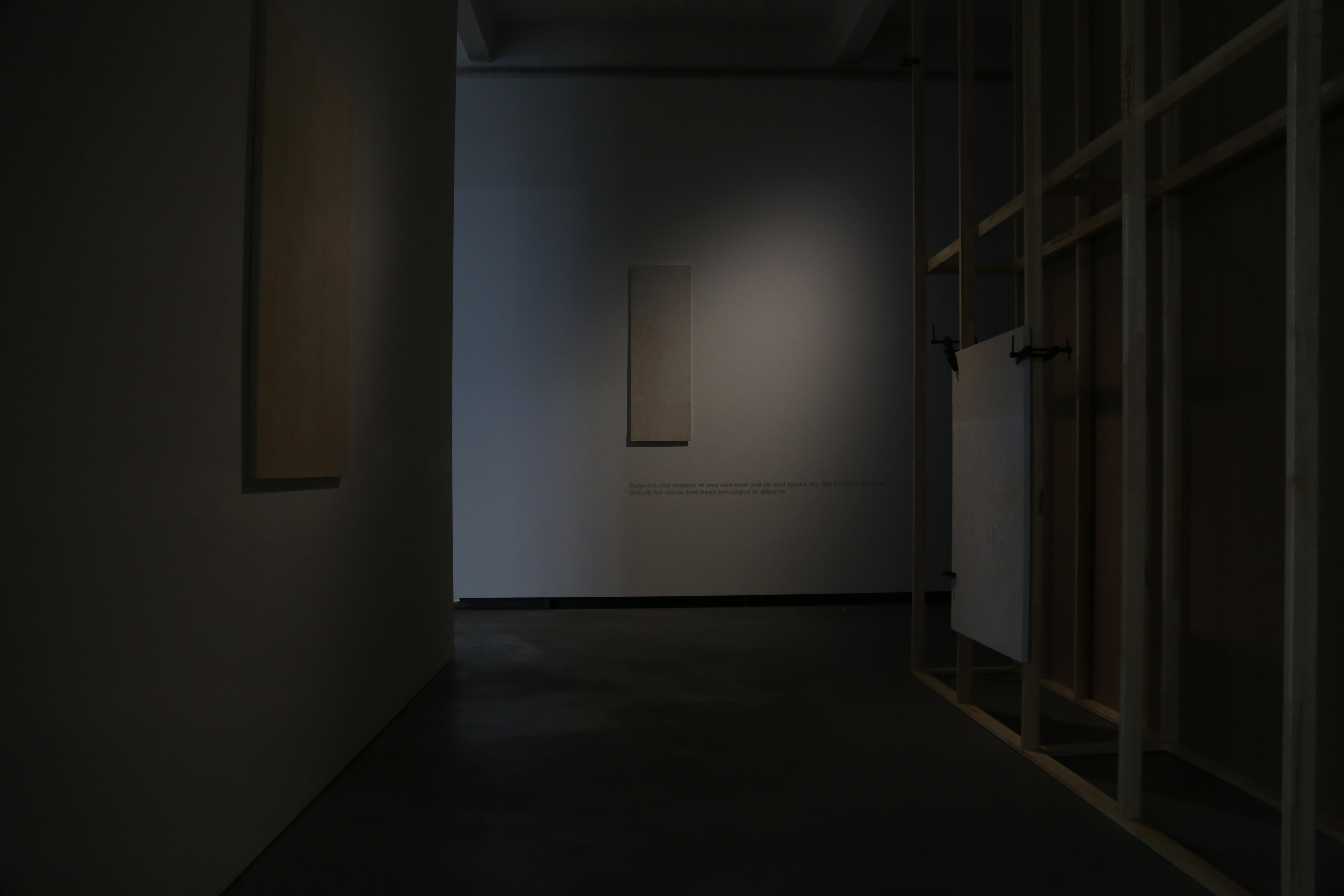
In the fifth month of my residency, I presented the outcomes of this journey in a group exhibition. The venue, located in the artists’ village, is a former “lichtfabrik” (light factory) refurbished into a museum space. Covering more than 700 square meters, it includes a ground-floor glass display facing the street, a second-floor gallery with ample natural light, and an additional interior exhibition space. The show featured artists from 5 different countries. My work was installed toward the back of the venue, with the layout designed as a kind of time tunnel. As visitors progressed through the exhibition space, shadows of plants and engraved texts gradually appeared on the walls, accompanied by installations themed around “time” and “light.”
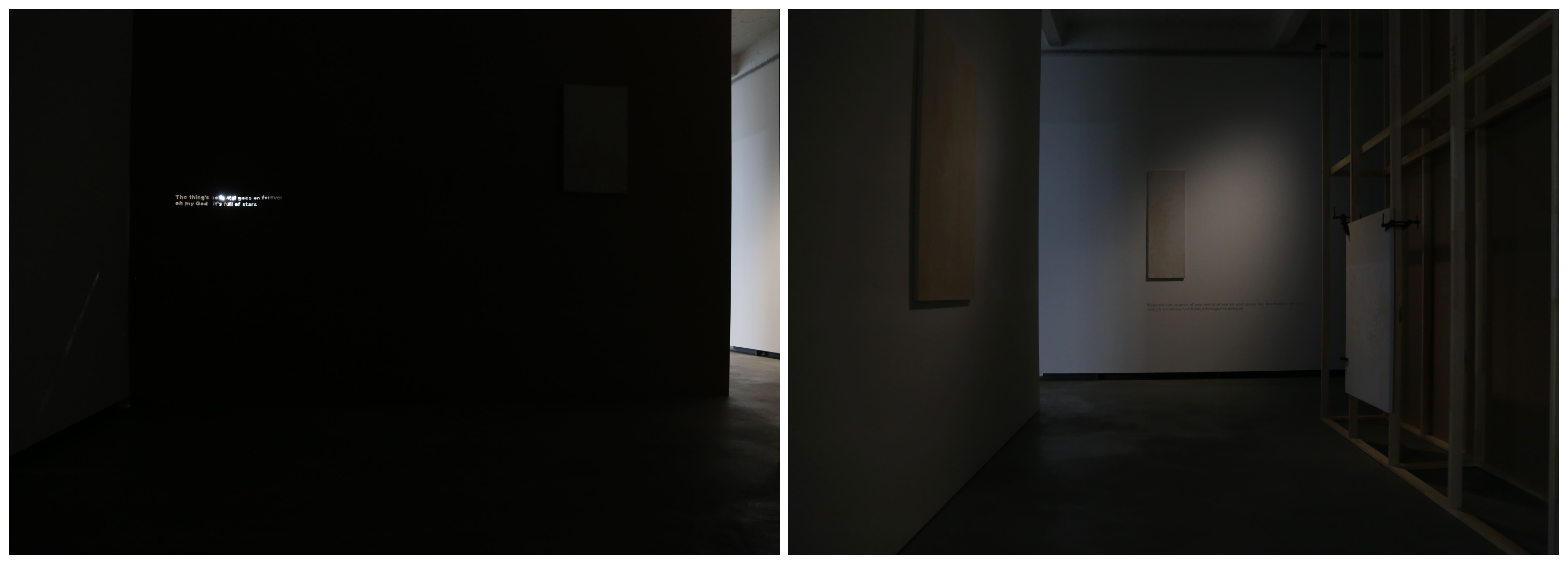 Presentation of residency project Phototaxis – installation view
Reflection of the Setting Sun
I remember that each night, as darkness fell, the small bar at the entrance of the artists’ village would come alive, serving as a space where artists gathered to connect, unwind, and exchange ideas. I often preferred to sit in a corner, watching people come and go, listening to their conversations about art, life, and future plans, and sometimes simply observing or letting my mind wander. During the residency, I also took part in talks, guided tours, and open studio events. These experiences gave me new perspectives on the diverse ways art is shaped across different cultural contexts.
From the chilling winter snow when I arrived to the blazing summer sun as I left, my residency journey unfolded at its own steady pace. I cherished each day of this time, whether spent working alone, sharing dinners with fellow artists, going on boat trips to the outskirts, visiting exhibitions, or exploring art institutions. My time at Bethanien was a quietly flowing chapter, an experience that allowed me to rediscover a different relationship between “creating” and “living.”
Residency in a foreign place is not merely a change of workspace; it is more like a practice of self-dialogue. Like the city of Berlin, which moves forward while carrying the weight of its history, I too hope to find a rhythm of my own through this process, to keep creating, and to keep living.
Author: Chen-Hung CHIU
Edited: Brix