Chu Feng-yi
Chu Feng-yi holds a PhD in Asian and Middle Eastern Studies from the University of Oxford. He has served as Convenor of the Taiwan Studies Programme at St Antony's College, University of Oxford, and as a postdoctoral research fellow at the Institute of Sociology, Academia Sinica. In recent years, he has worked as an independent curator and art critic, focusing on mysticism, posthuman theory, and technology and the arts.
His curated projects include "Relocating Divinity: Being an Atheistic Theist" (2019), "Cross-Dimensional Transmission: Synchronic Encounters between Art, Technology, and Mysticism" at the Kaohsiung Main Public Library (2020), "Zoo of Inverted Forms: The Ultimate Other for Imagining Humanity" – a collateral exhibition of the 2020 Taiwan Biennial, "Dear Block Chen" (2021), and "Young Folks: World as an Aesthetic Membrane" at Museum of Contemporary Art, Taipei (2026).
His writings have appeared in Artco Monthly & Investment, ARTouch, The Reporter, No Man's Land, SCREEN, among other magazines and platforms. He is also the producer and host of the podcast "Cross-Dimension Broadcast."
- Location USA / New York, NY
- Year of the Grant 2024
- Residency International Studio & Curatorial Program (ISCP)
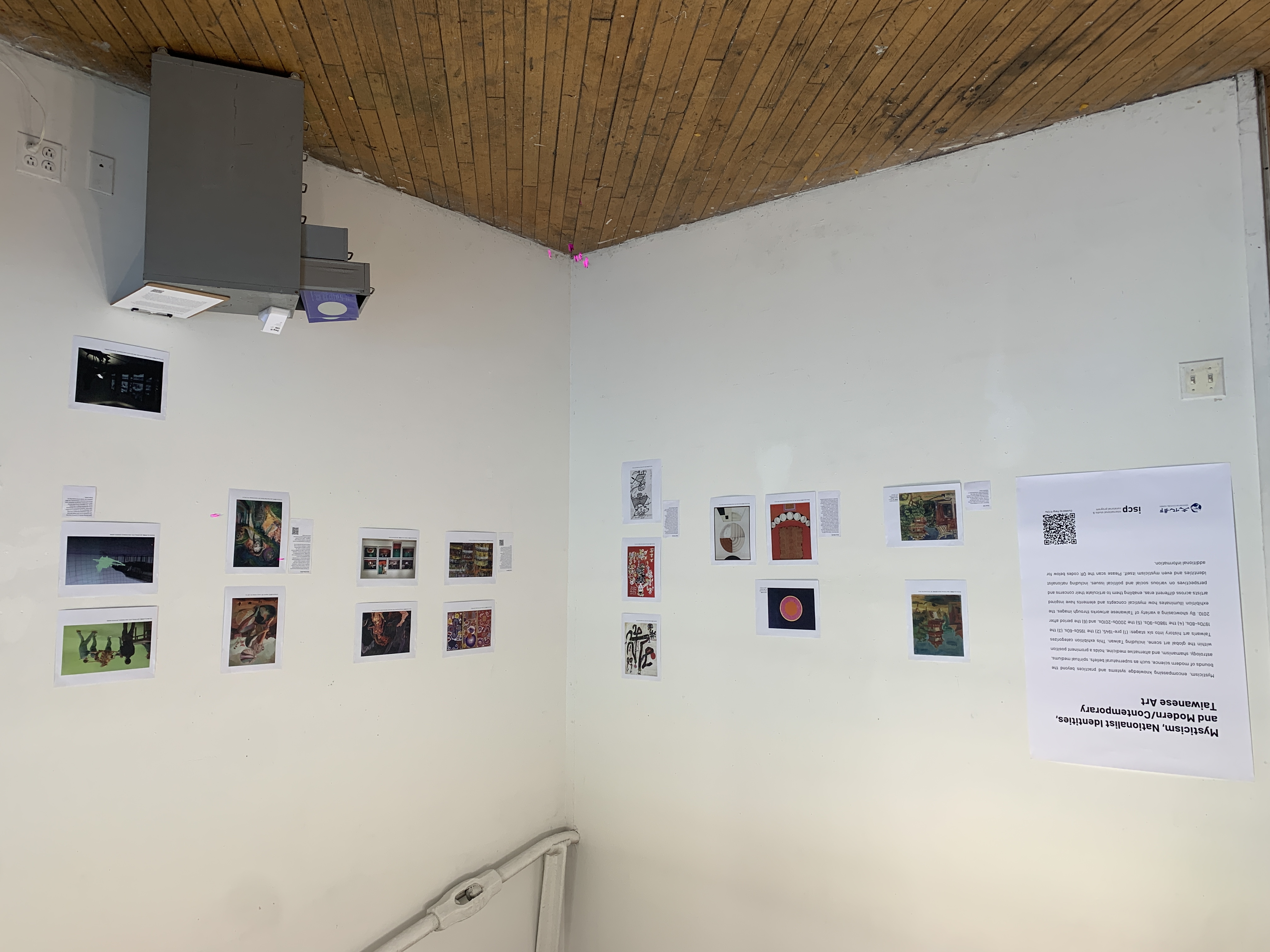
- Work Mysticism, Nationalist Identities, and Modern/Contemporary Taiwanese Art
- Personal Website Chu Feng-yi's Personal Website
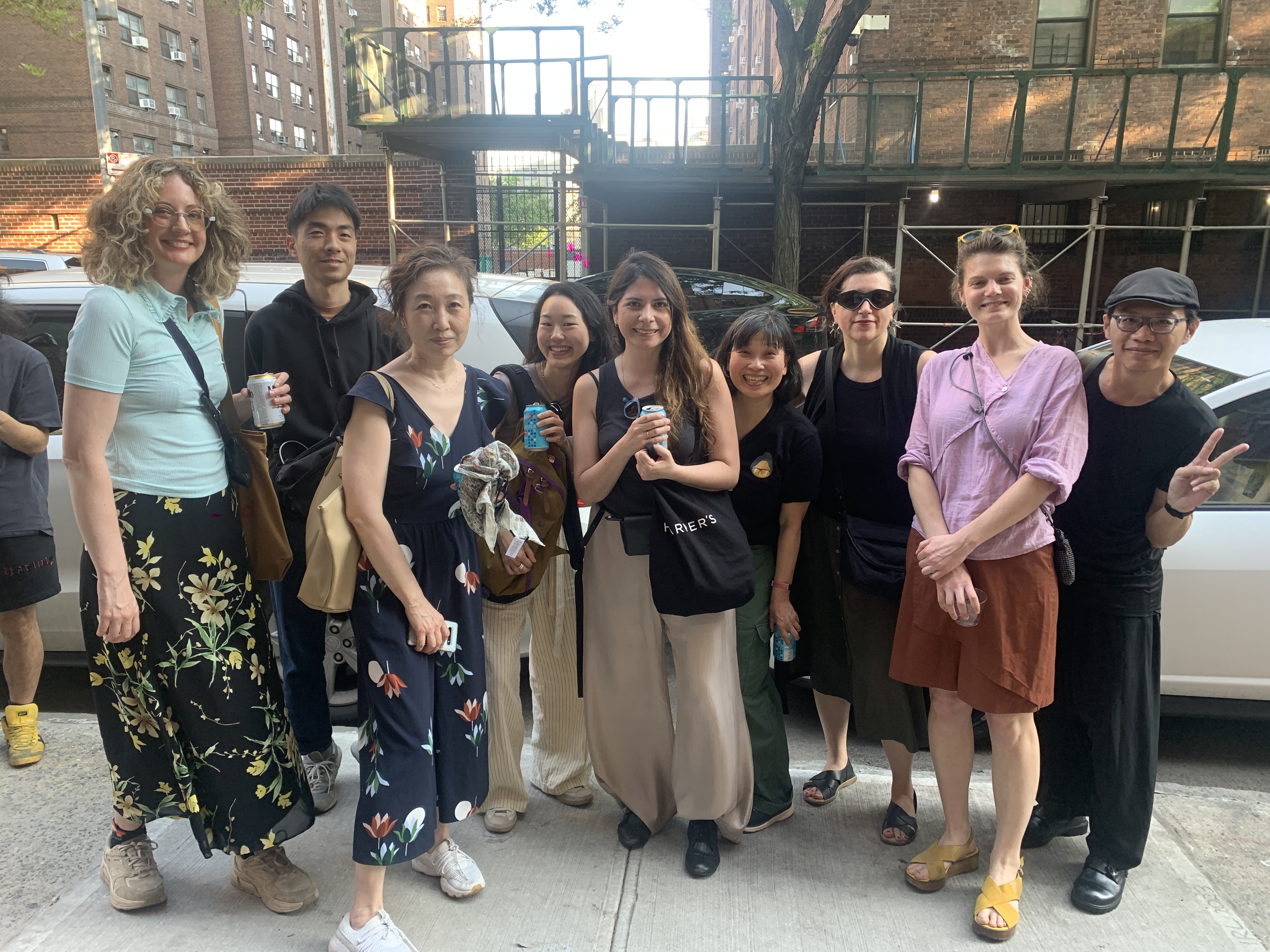
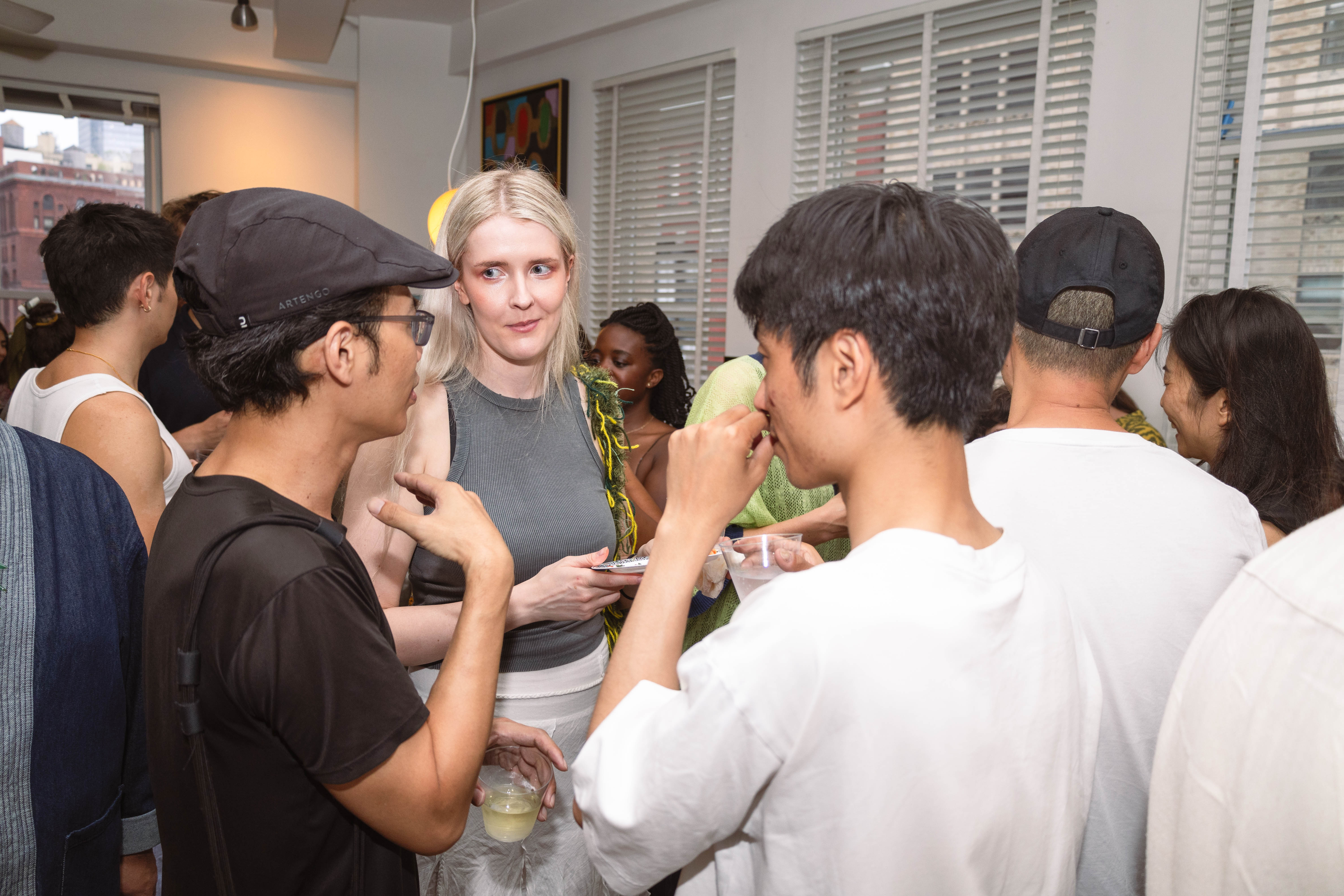
The International Studio & Curatorial Program (ISCP), located in Brooklyn, New York, hosts monthly programs such as artist talks, gallery tours, and studio visits with art critics.
My residency had two primary objectives. The first was to introduce Taiwanese artists and my curatorial research to the New York art community. The second was to investigate the role of mysticism in modern and contemporary American art.
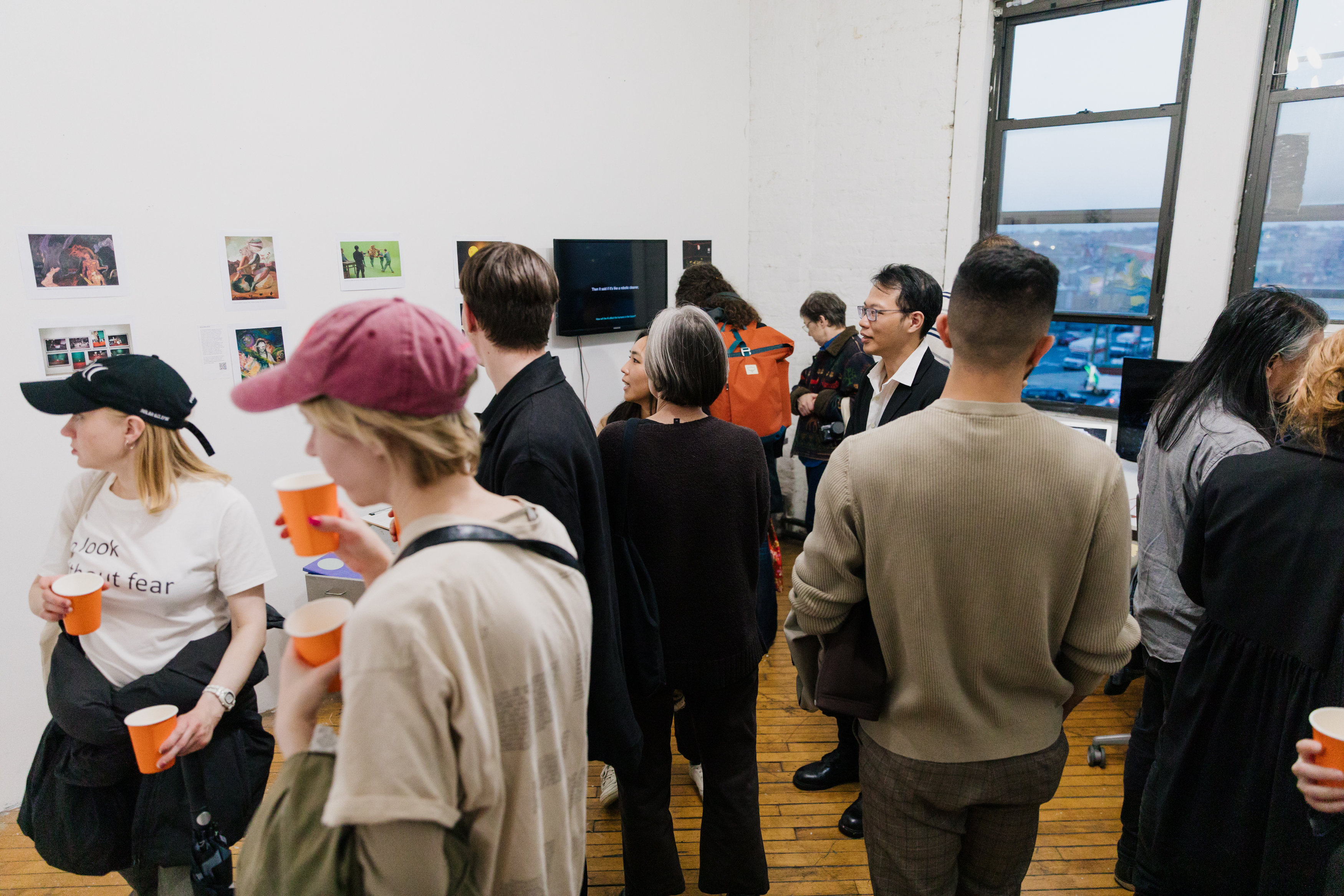
During the Open Studios, I presented a six-stage framework tracing the development of mysticism in Taiwanese art history. Beginning with the realist tradition of religious subject matter during the Japanese colonial period, the presentation examined the impact of Western abstraction following the Nationalist government's arrival in Taiwan, the rise of local consciousness and self-taught art in the 1970s and 1980s, and the emergence of symbolic and metaphorical expressions shaped by social movements in the 1990s. It concluded with contemporary artists who employ mystical practices as a mode of artistic research, integrating them with feminism, ecofeminism, and futurism to develop new artistic directions.
During the residency, I also observed how artists from diverse ethnic and cultural backgrounds in the United States draw upon the mystical traditions of their own cultures to address social issues and articulate cultural identities. I completed and published five related pieces of art criticism, including three artist interviews and two exhibition reviews.
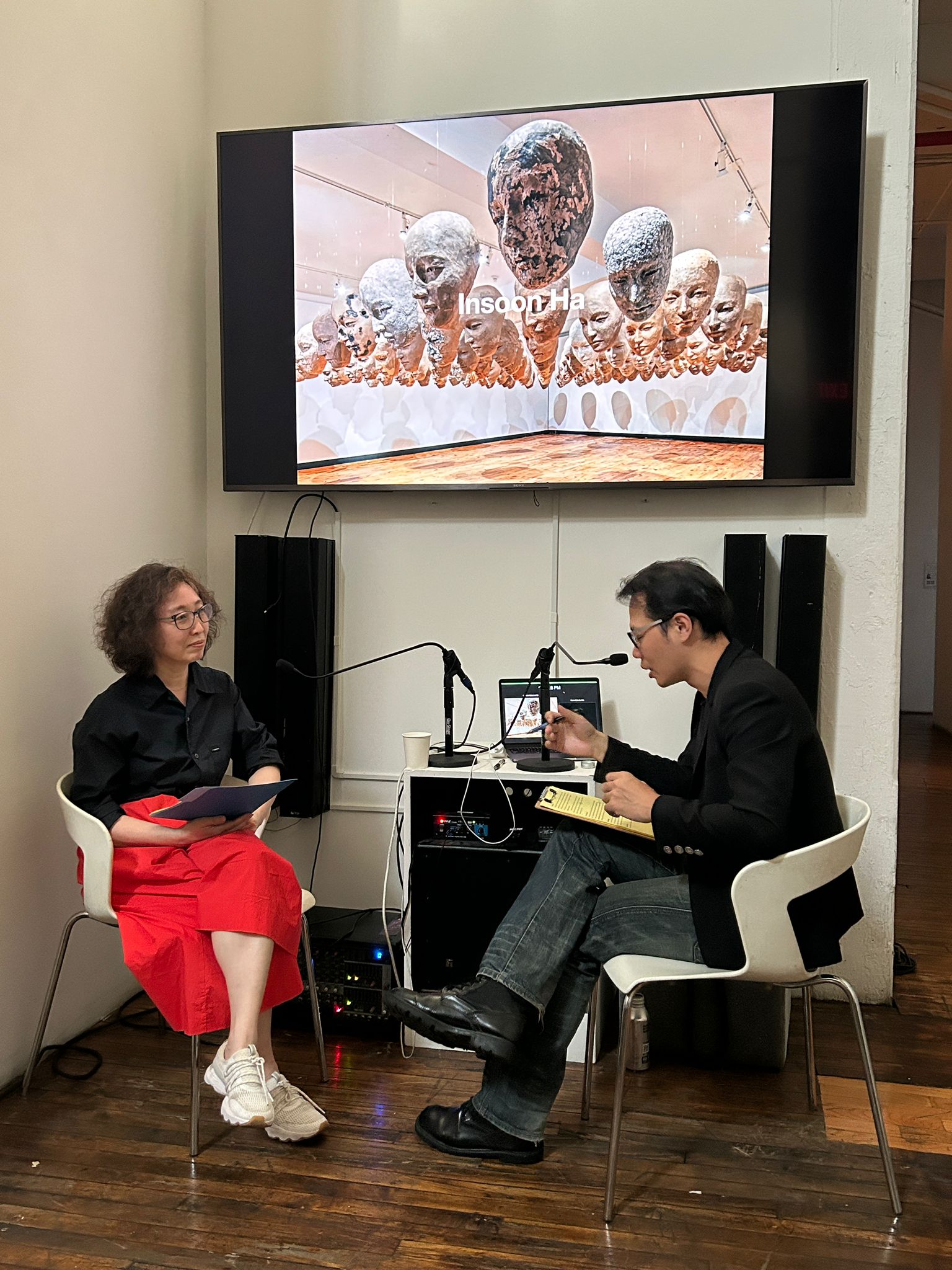
In addition, I also worked closely with ISCP by assisting with public programs, including an artist talk by Insoon Ha, serving as a juror for ISCP's open call for curators, and representing the residency cohort in a presentation to the Board of Directors. In addition, I was invited by the Elizabeth Foundation for the Arts (EFA) to participate as a visiting curator. Beyond deepening my understanding of the contemporary American art scene and increasing the visibility of Taiwanese art in New York, the residency has become an important foundation for my future curatorial research and exhibition projects.
Author: Chu Feng-yi
Edited: Brix