
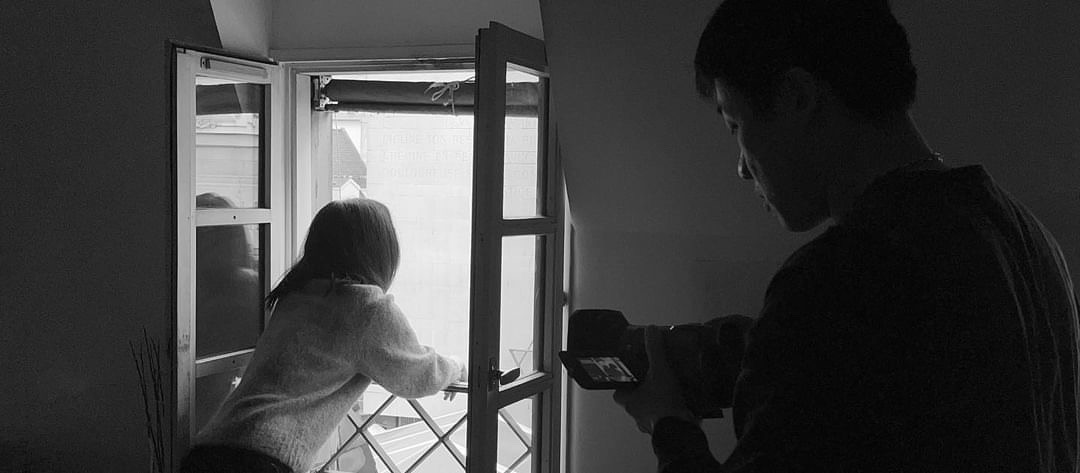
Angie Wang
Angie Wang (artist name) is an actress, voice actor, and acting coach, currently serving as an adjunct assistant professor at the MFA Program of Performing and Creative Arts, Tunghai University. In recent years, she has collaborated with theater groups such as the Performance Workshop, 4 Chairs Theatre, Shakespeare’s Wild Sisters Group, Tainaner Ensemble, Edward Lam Dance Theatre (Hong Kong), Mr. Wing Theatre Company, and Ear East Ensemble, among others. Wang has toured extensively across China, Japan, Singapore, and France, amassing an impressive repertoire of over fifty works across theater and film. The artist’s notable theatre performances include Sleep in Spring, Dress in Code, In the Solitude of Cotton Fields, The Village, Re/turn, Awakening, Taipei Dad, New York Mom, and co-wrote and co-directed the one-woman show Before outdated, as well as television films such as Alifu, the Prince/ss and Gin and the Virgin. Beyond acting, she is a performance coach for actors, theatre companies, and film productions.
Since 2018, Wang has participated in several Taiwan-France co-productions with the National Theater & Concert Hall. In 2022, she was invited to perform in France, and in 2023, she was selected as an artist-in-residence at Cité Internationale des Arts in Paris, where she launched a project exploring marriage narratives across cultures. In 2025, Wang will perform in Doreen, another Taiwan-France co-production at the Taiwan International Festival of Arts.
- Location France / Paris
- Year of the Grant 2023
- Residency Cité Internationale des Arts
- Work Scenes from a Marriage
- Personal Website Angie Wang's Personal Website
1. In all other artistic forms - be in music, film, visual arts, sculpture, dance, or installation - there exists a universal language that transcends national borders. However, for stage actors, whose craft is rooted in “live performance” and “the theatrical form,” the very state of “being human” becomes their only vehicle. Does this mean they will be eternally bound by external conditions, such as race, language, age, appearance? How can an actor discover a shared language beyond these boundaries? Or perhaps, the answer lies in dissolving the boundaries altogether?
2. Actors are passive; they are chosen. Given a world shaped by playwrights, they must render it truthfully in a specific time and space, their experience confined by its limits. But what if we reverse the order of storytelling? Instead of embodying a pre-written narrative, what if we live through something first, or “live out” something before “performing” it?
3. If we were to erase or replace “conflict” in the context of good drama, what would it be? This question has sparked discussions among playwrights and filmmakers. We have come to a preliminary conclusion, “change.” But is change alone enough to create compelling drama?
4. After I decided to write a project on marriage based on my own experiences, many people mentioned artist Sophie Calle to me. So, when Calle was in residence at the Picasso Museum, I knocked on her door. Calle is known for her work that unveils both her private world and that of others, sometimes to the extent of controversy. I shared my marriage project with her and asked how she deals with the anxieties of creation and existence. She told me that she wasn’t a teacher and had no advice to give. She simply kept saying what she wanted to say in her own way and said that I should do the same.
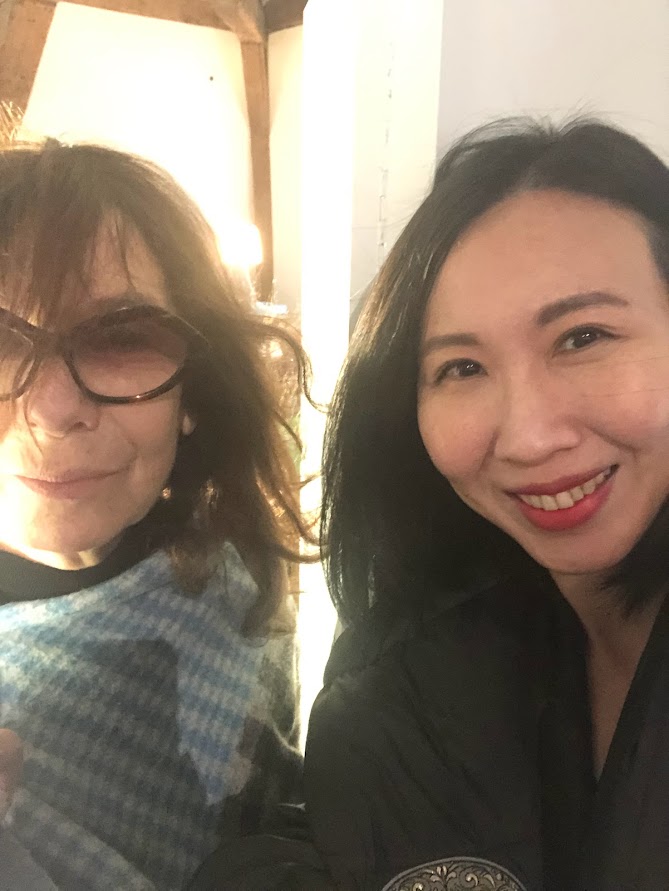
5. Thanks to Cité Internationale des Arts’s arrangement, I had a one-on-one conversation with veteran journalist Elisabeth Lebovici. She urged me to start an “I want…” manifesto. Just for instance, she offered, “I want to audition for roles that aren’t typically assigned to Asian women.” She also encouraged me to continue exploring the possibilities of Asian female representation through my marriage project. Her words made me reconsider, “What do I really want?”
Author: Angie Wang (artist name)
Edited: Brix