Sara Wu
Sara Wu often draws creative inspiration from things and spaces in everyday life that are easily overlooked. Through moving images, she observes and collects these spaces, while attempting to practice using vision to guide perception, thereby re-experiencing a lifeworld that has been compressed into “surface.”
Through the encounters and transformations of moving images, installations, and found objects across different spaces, she seeks to explore the capacity of materials to unfold and conceal information within different temporal and spatial narratives. From this, she reflects on the states of existence of things, as well as the personal conditions and collective social phenomena they mirror.
Her works have been presented at the Royal Society of Sculptors, Künstlerhaus Bethanien in Germany, Robert Capa Contemporary Photography Center in Budapest, Taipei Fine Arts Museum, and the National Taiwan Museum of Fine Arts, among others. She received the Honorable Mention of the Taipei Art Awards in 2022, the Honorable Mention of the Taoyuan International Art Award in 2021, and was selected for the Parallel Photo Platform in Europe in 2019. In recent years, she has collaborated with artist Tseng Yen-Hsiang to co-plan and carry out “ss space space,” an art collective and art space centered on the research of “space.”
- Location Germany / Berlin
- Year of the Grant 2024
- Residency Künstlerhaus Bethanien
- Work Placeholder
- Personal Website Sara Wu's Personal Website
So much of the established orders and values seem so unstable in today’s world, where global politics, society, and technology is changing so fast. This has inspired me to think about how we organize our homes and spaces, how we look at everyday objects, and how all of that affects our search in daily life. I’ve always been deeply fascinated by Berlin, not only because it is a key hub of contemporary art in Europe, but also its multiple layers of history and socially engaged art and cultural scene. These are the reasons that drew me to Berlin to do my creative research. During my residency at Künstlerhaus Bethanien, I wanted to do some fieldwork and explore different media. I also wanted to examine my recent productions from new and fresh perspectives. This is a chance for me to observe how contemporary art is presented in Berlin and to search for new potentials in my art career.
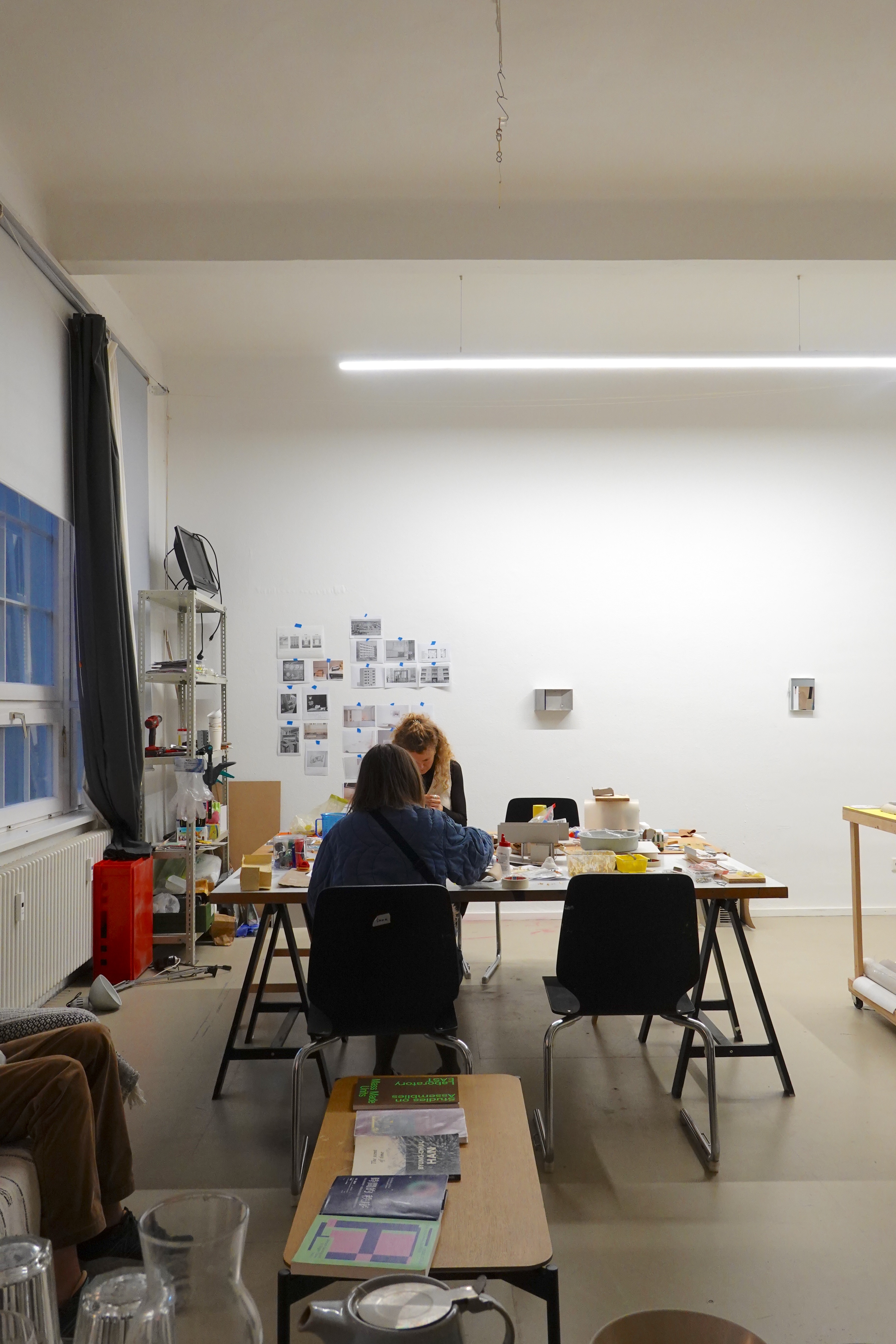
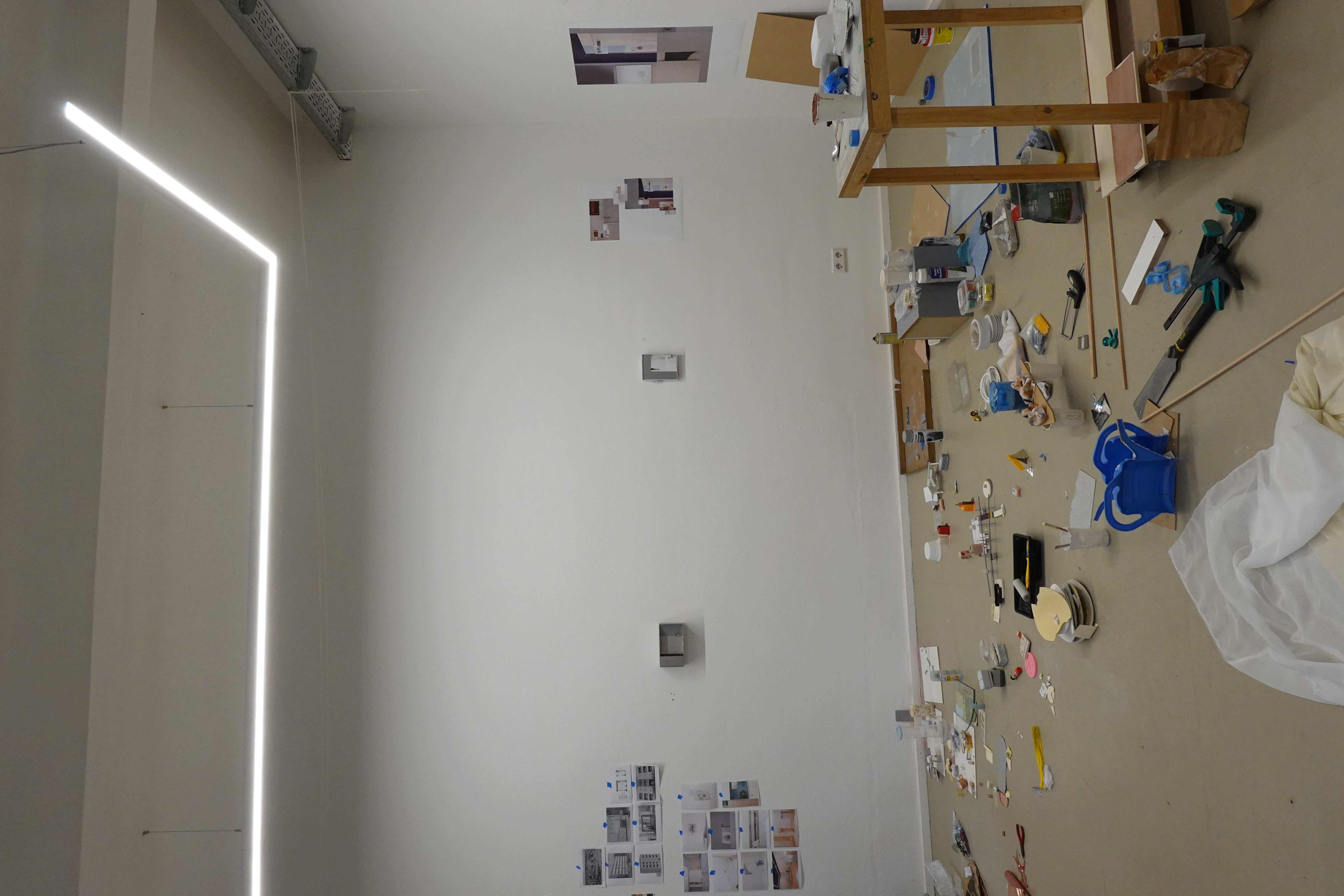
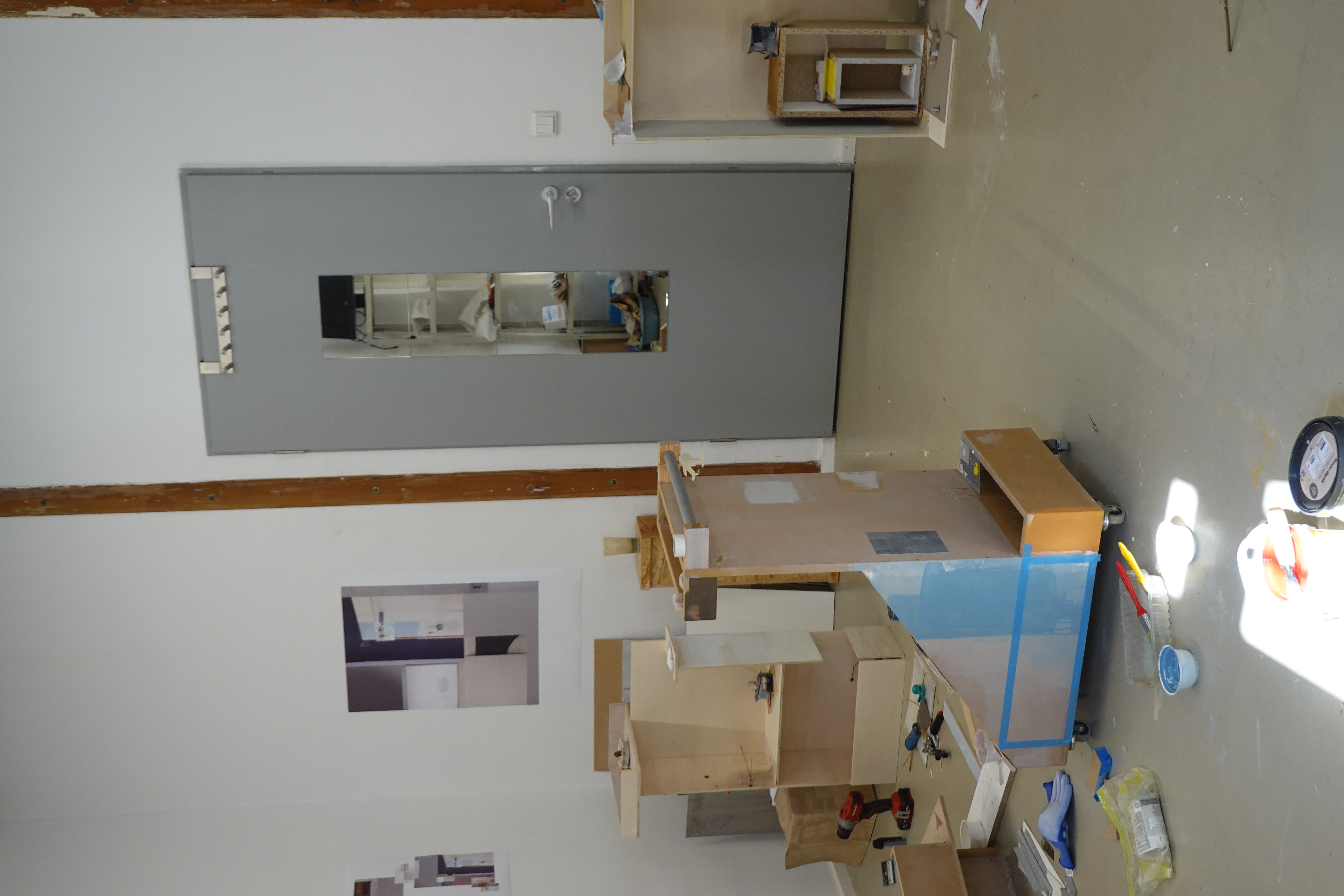
Künstlerhaus Bethanien houses a spacious sculpture studio and workshops with professional facilities. The space is excellent for producing installation and sculptural work. There are technical staff on site if you need help with the tools and equipment. The program also focuses on connecting resident artists with the local art circle. Examples include organizing open studios and networking events gathering curators, institutions and the local community to come together and exchange ideas.
Berlin's Art Scene & the Residency Environment
Overview of Berlin’s local art scene
Berlin is one of the most experimental and diverse art cities in the world. The city is home to more than 600 galleries and over 6,000 artists. The city’s artistic productions and performances thrive because of the rich diversity of these artists. Since the 1990s, international art events such as Art Forum Berlin, the Berlin Biennale, and many more have led to lively, vibrant gallery neighborhoods such as Auguststraße in Mitte, Kreuzberg, and Wedding and over 160 museums. This created a very grounded yet professional art scene that is uniquely Berlin, where creative communication happens across multiple layers and forms. During my stay here, I visited many local art organizations and events such as the Berlin Biennale, Berlin Design Week, and the Gallery Weekend Berlin. I really felt the energy and the dynamic of Berlin as an international art hub.
A massive government budget cut in art and culture took place right after my arrival in Berlin. So during my stay here, one of the most frequently discussed topics between me and local art groups and artists was how Berlin has changed in the last five years and how artists are managing to survive after the cuts. I also observed how local artists and curators used their art to respond to the issue. I will keep track of how Berlin and local art groups adapt to these budget cuts.
Another very impressive thing about Berlin is the flexibility of Berlin’s exhibition spaces and the critical art language used here. For example, museums are not the only venue where art displays in Berlin take place. It could be a public space, a community, a factory, or even a historical ruin. It was eye-opening to see so many possible ways to present art.
My Residency Project
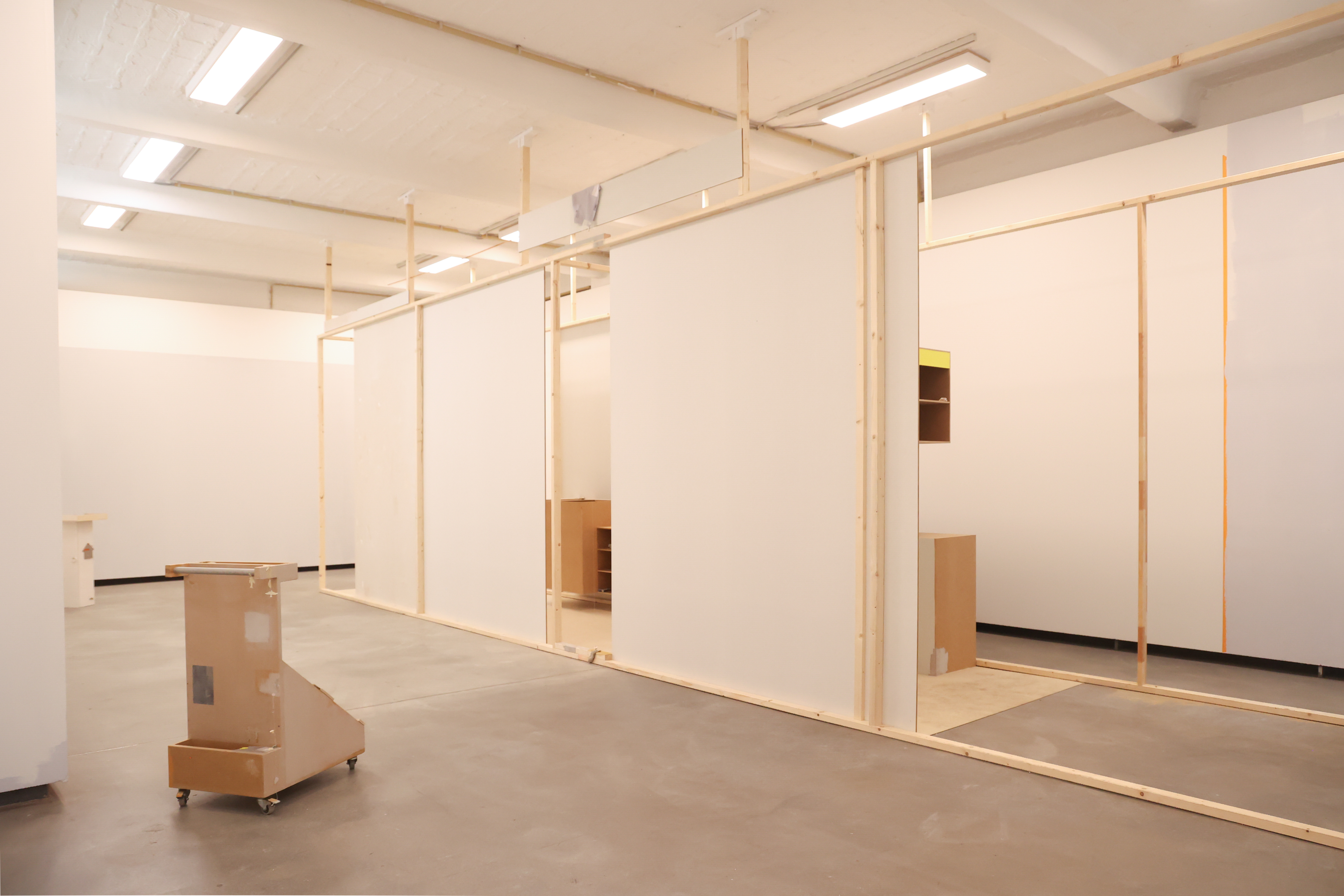
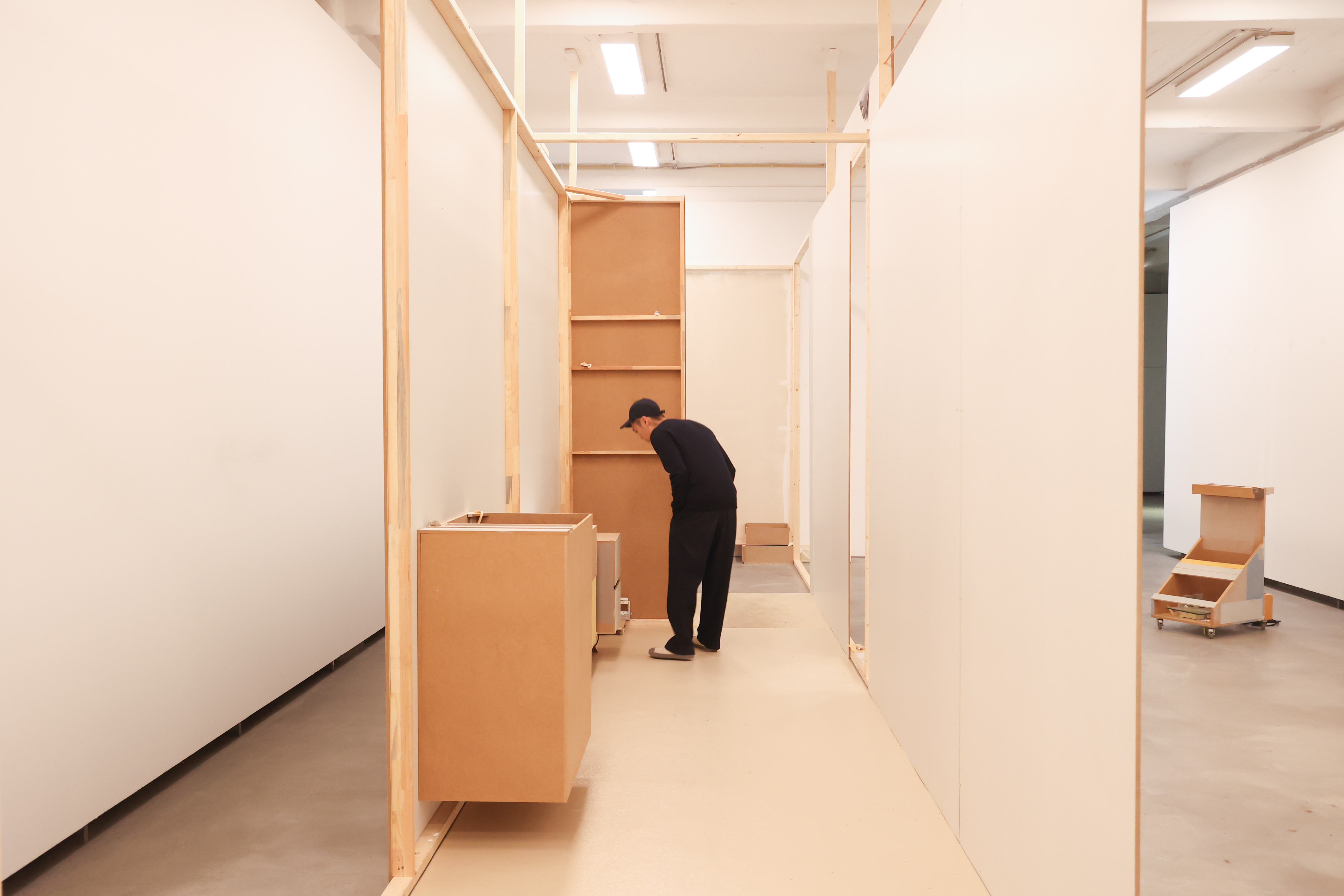
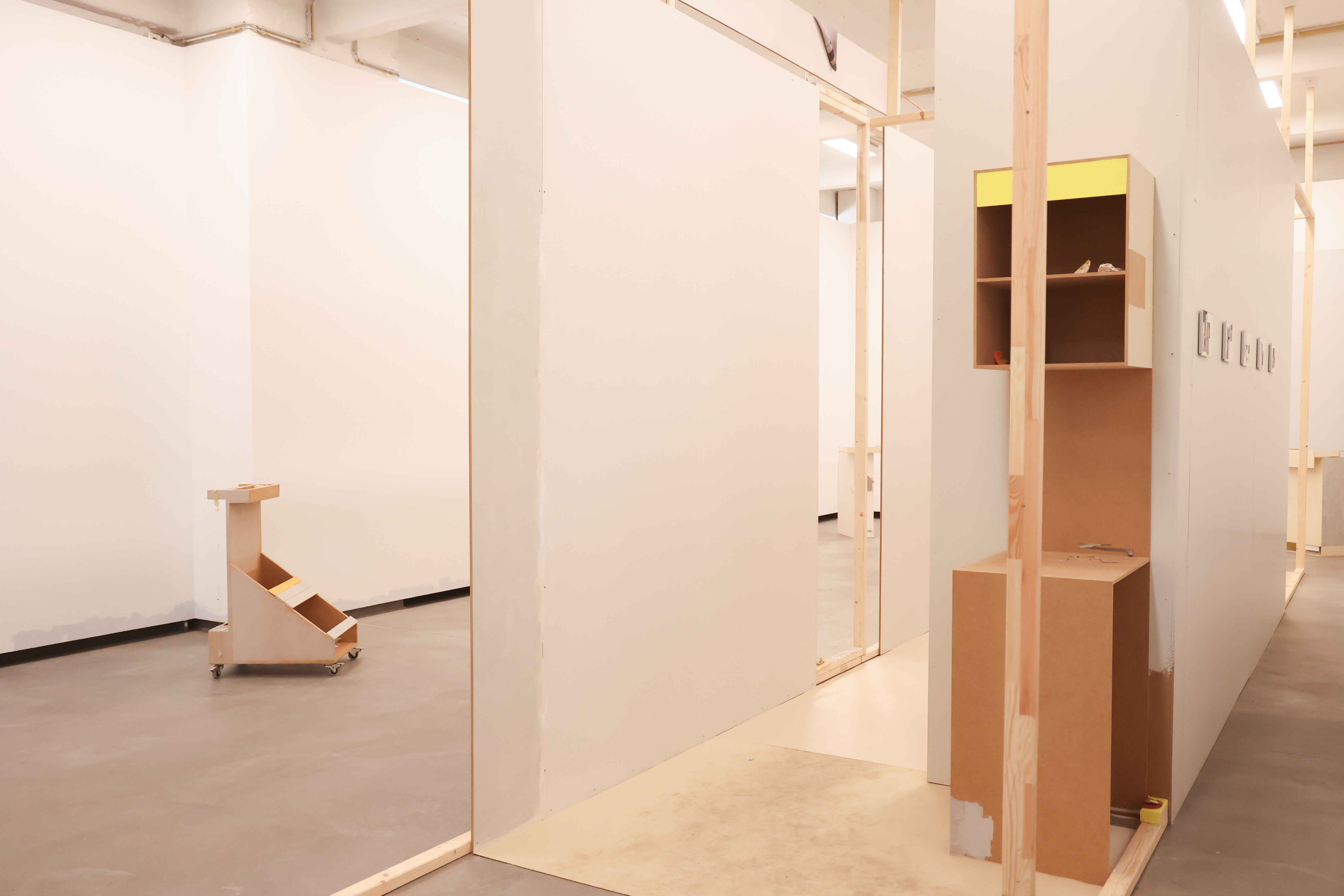
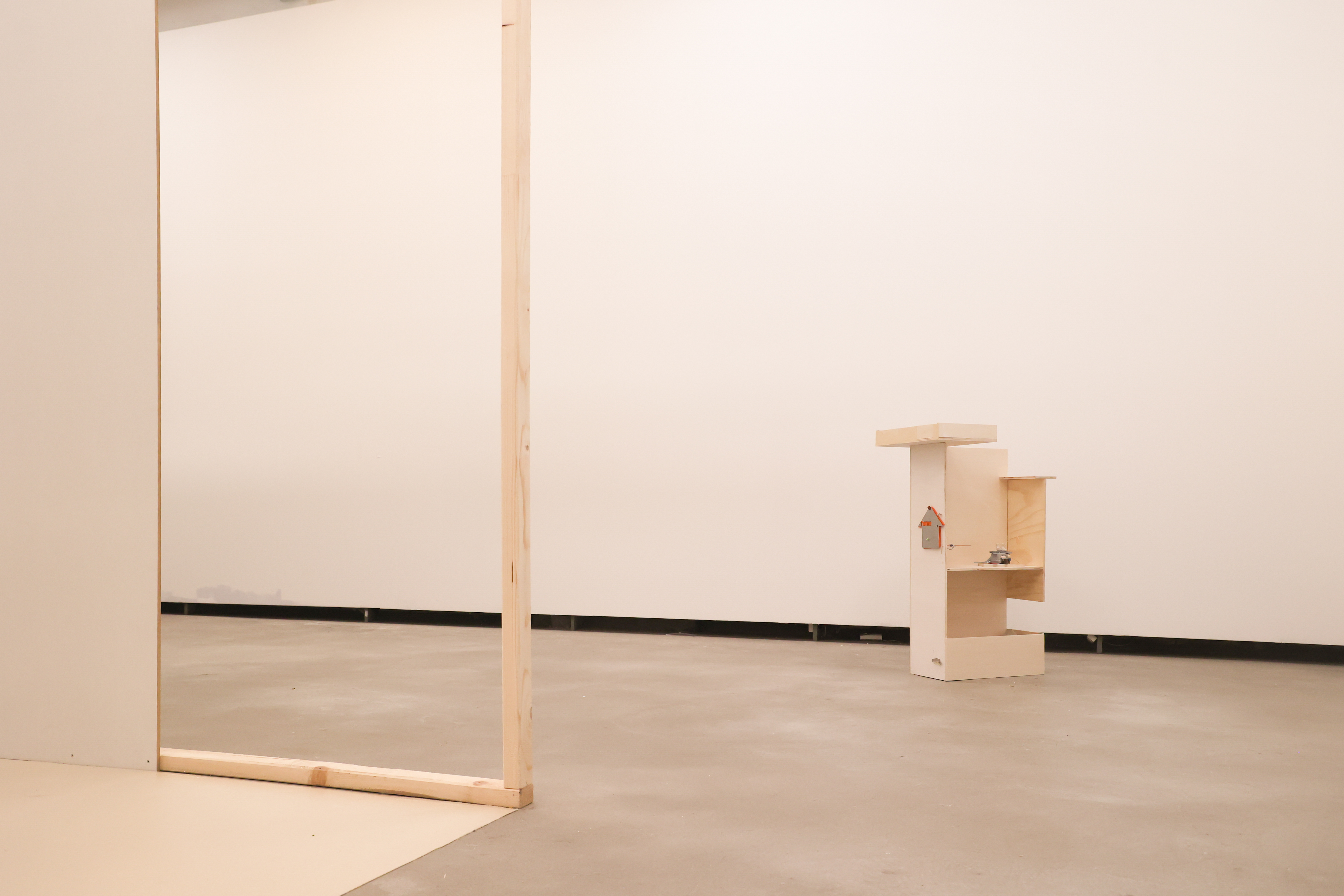
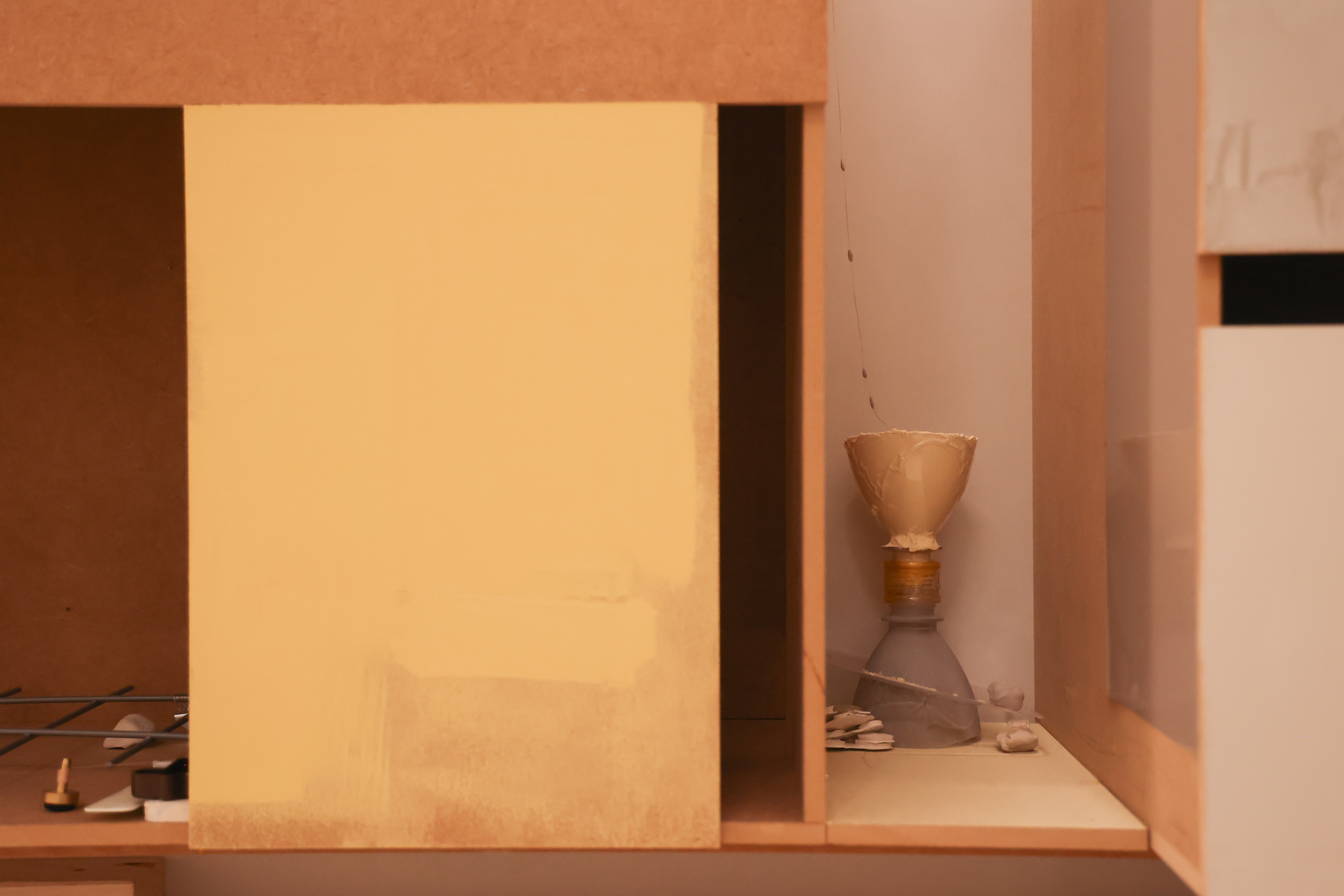
My residency project Placeholder is a site-specific installation that people can walk in to view the work. By messing up the scale, the order, and layout of objects in everyday life, I wanted viewers to think again and feel the relationship between space and perception.
A long, narrow corridor was built into the gallery where people could wander around and look around. I left empty gaps and irregular openings in the space to play with how objects and their pedestals are covered up or revealed. I wanted to create this feeling of "pause" and "break" when we look at the artworks in the gallery.
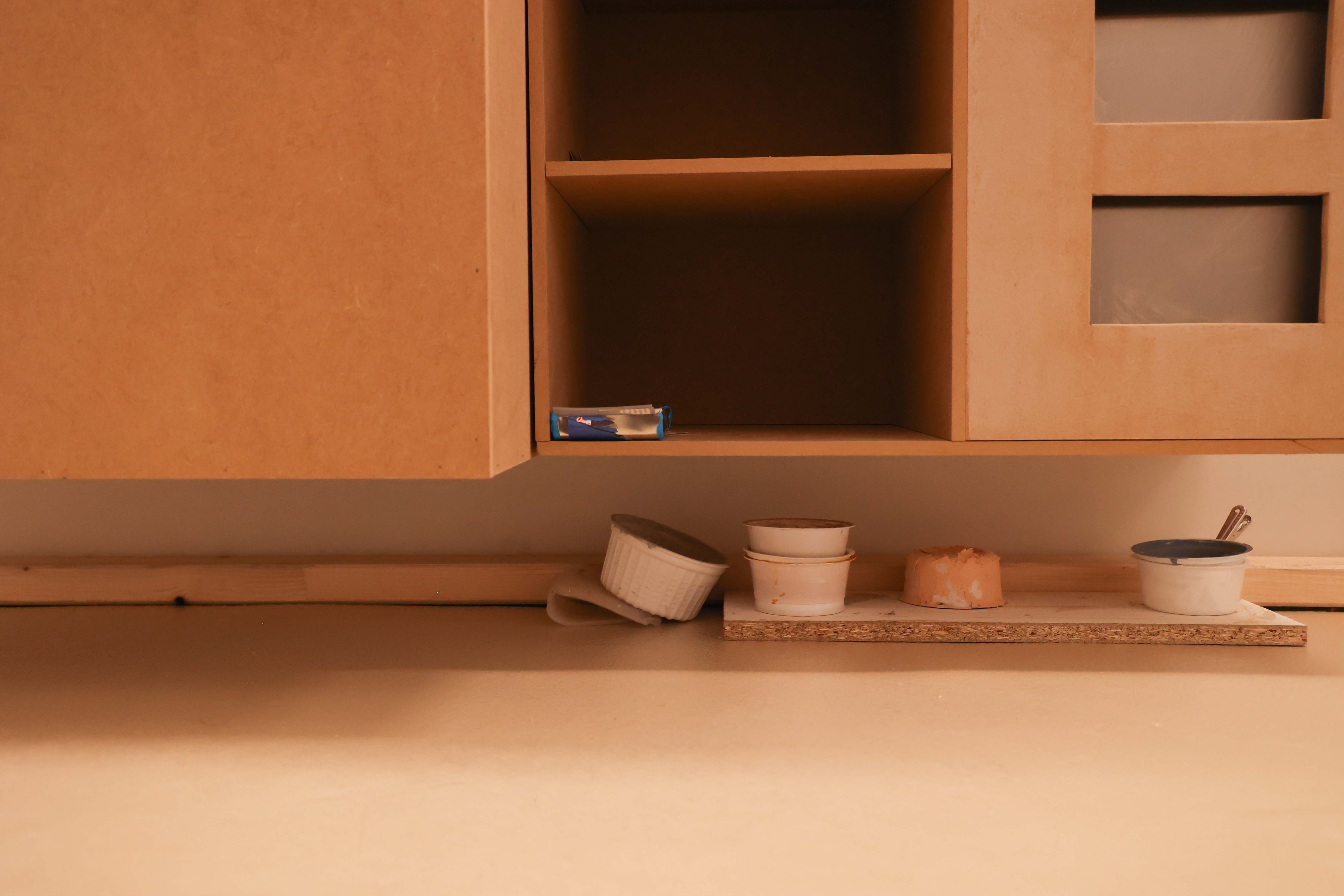
I also added several sculptural “systems” made from everyday items and sculpting material into the installation. Many of the parts used in the systems were originally functional items that had practical uses in daily life. I stripped them of their practical function and reset, rebuilt, and recombined them into sculptural systems to give them a whole new meaning in the display room. I place these systems on platforms made from home furniture to create a surreal landscape in the gallery. By distorting the objects’ proportions, discontinuing the objects’ functions, and removing these objects from their original place, I wanted the gallery to be perceived as if it is somewhere between physical and virtual space, that our bodies could move in and out of installations and that objects could be seen but still seem and feel as if the whole thing was an unfinished 3D rendering. The space keeps flipping back and forth between the real and the imagined.
The design of this piece of work was inspired by standardization and functionality in interior design in early 20th-century Germany. The main structure running through the corridor pays respect to Margarete Schütte‑Lihotzky’s “Frankfurt Kitchen” in 1926. The kitchen was designed to make housework more efficient and the space more functional for women. However, the layout ended up reinforcing gender roles and socially-accepted family structures. I wanted to create a similar dynamic between function, logic, order, and social roles in my work. I am also taking a further step to invite viewers to move their body and be aware the space around them in their everyday life.
Author: Sara Wu
Edited: Brix